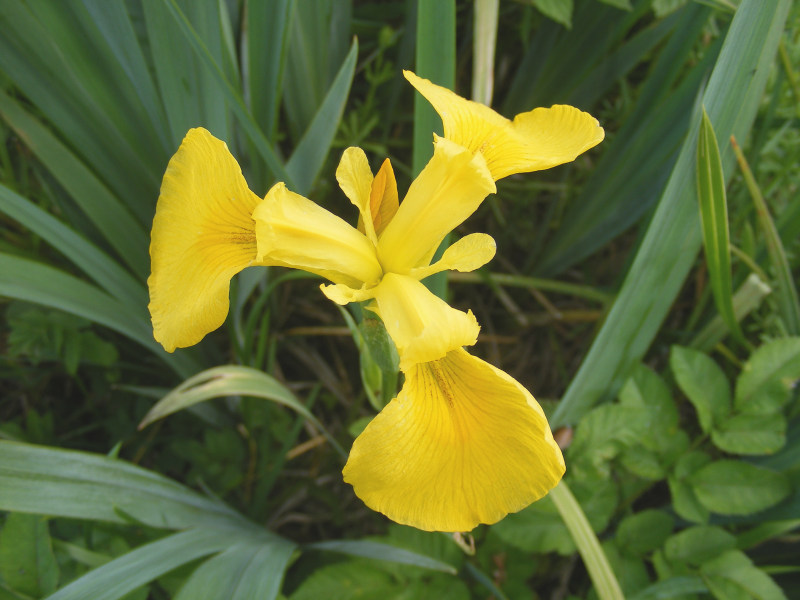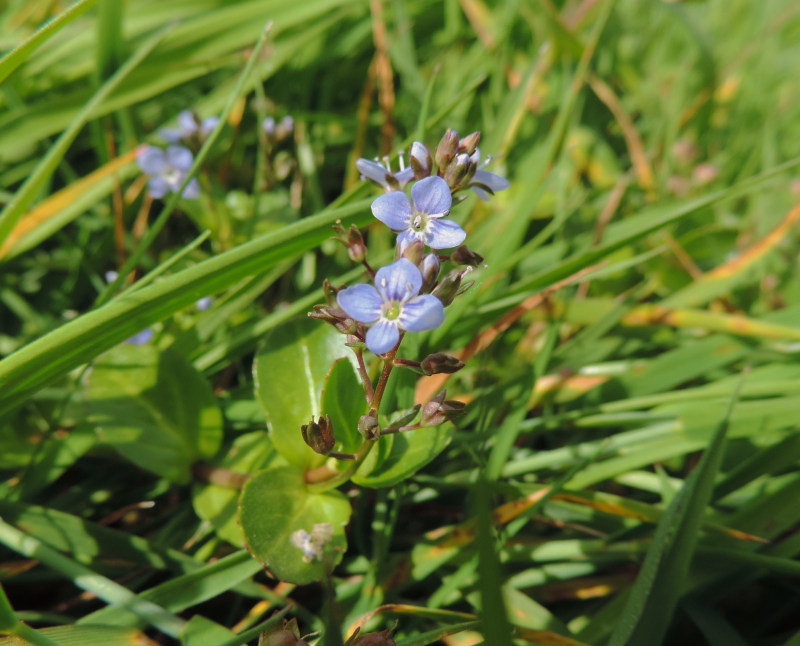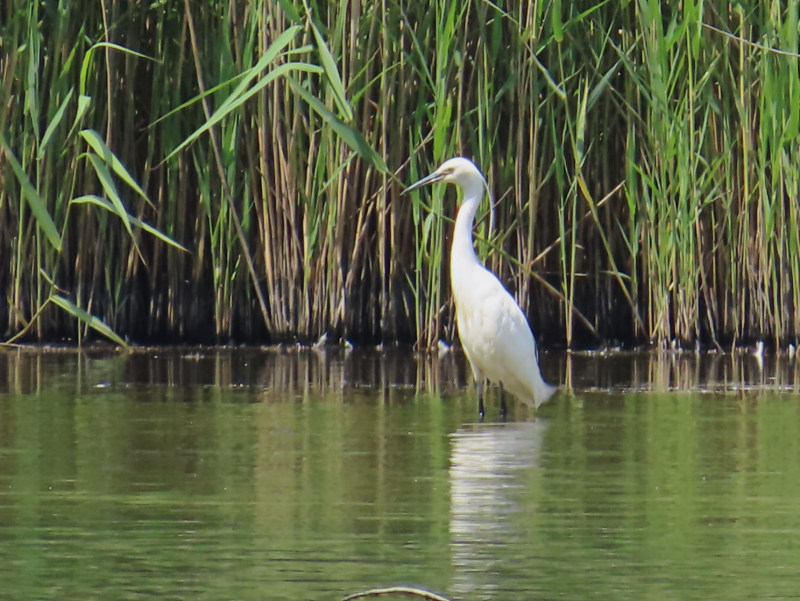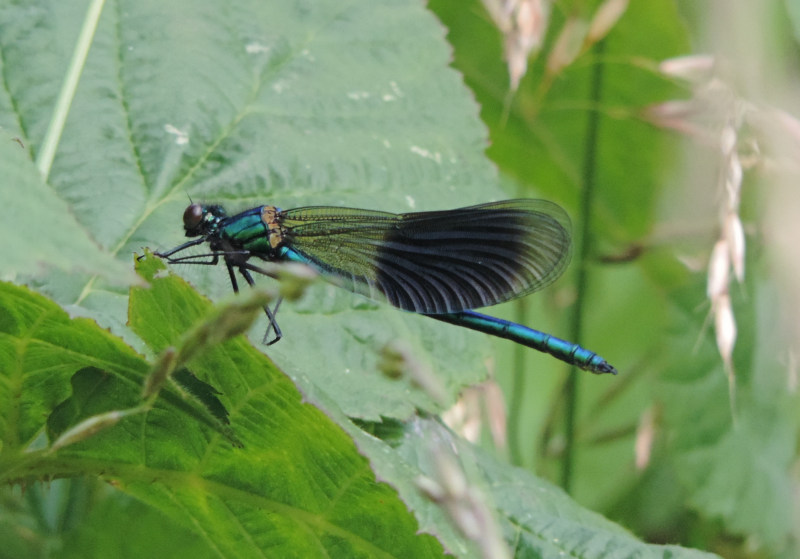
Adrian Lawson led a walk round Fobney Marsh on the morning of Saturday 3 May, starting from the Matalan car park. This area is the last surviving fragment of the River Kennet floodplain. A gap in the trees at the south-west end of the car park led to the line of a dismantled railway. Sightings along here included a Speckled Wood and a Brimstone butterfly and a Banded Demoiselle. Blackcaps were singing and Chiffchaffs and Cetti’s Warblers were calling. The meadows between the north-west side of the railway line and the Holy Brook were formerly summer grazed by cattle. They were recently bought by the owners of the trading estate. The meadows on the south-east side were owned by a company which was subsequently taken over by the Tarmac Company. They hoped to extract gravel there, but planning permission was refused. These meadows lie on the site of an ancient watercourse of the River Kennet and are referred to by Adrian’s group, the Marshians, as the Tarmac Meadows. Beyond are further meadows owned by Reading Borough Council. None of the meadows are currently being grazed. The route led steeply down the left side of the railway embankment, then out onto the meadows. The first section had not been grazed intensively for 4 years, and for the last 2.5 years has not been grazed at all. Young willow bushes are starting to grow here and without intervention, the land will quickly revert to winter-flooded woodland. The drainage of the meadows was originally designed to dry the land as quickly as possible in spring. The Marshians on the other hand are trying to reduce the drying, thereby improving the meadows as a carbon sink. They have been blocking drainage channels. The owners are kept informed of their activities and have not objected. Plants seen in this section of the meadows included Meadow and Creeping Buttercup, Water Mint, Brooklime, Gypsywort, Silverweed and Water Chickweed. An Orange-tip egg was found on a flower stem of a Cuckooflower plant. A Sedge Warbler was heard and a Reed Bunting and a Grey Heron were seen. There was a brief glimpse of a Grasshopper Warbler. This was the first sighting since 2017, when four were found early one morning. A brief snatch of Nightingale song was heard coming from the far corner of the field. The path led to Thames Water’s Fobney Water Treatment Works. A footpath runs along the northern fence of the treatment works. It is wet in places where leaks from the works flow into the meadow then back into the canal. The Marshians have been plugging the hole back into the canal. Plants seen along this section of footpath include Common Comfrey, Wild Angelica, Bittersweet, Hemp Agrimony, Yellow Iris and Common Meadow-rue. The path overlooks a large area of open water. This has been created and maintained by large numbers of volunteers stomping down the vegetation. The mass trampling, together with tree clearance, has been very successful. Bird visitors to the open water have included Avocets and a Great White Egret. Four pairs of Lapwings are breeding here this year. Adrian commented that the Lapwings are very territorial and may have chased away other waders. Other birds on the open water included Coot and Moorhen, and Black-headed and Lesser Black-backed Gull. A Peregrine was roosting on a distant pylon, a Little Egret flew overhead and a Buzzard was seen. There are several other open water areas which have been created by mass stomping, but which cannot be seen from this section of footpath. The group then retraced their route back to the start.
Photos by Rob Stallard from the archive, not the Fobney walk