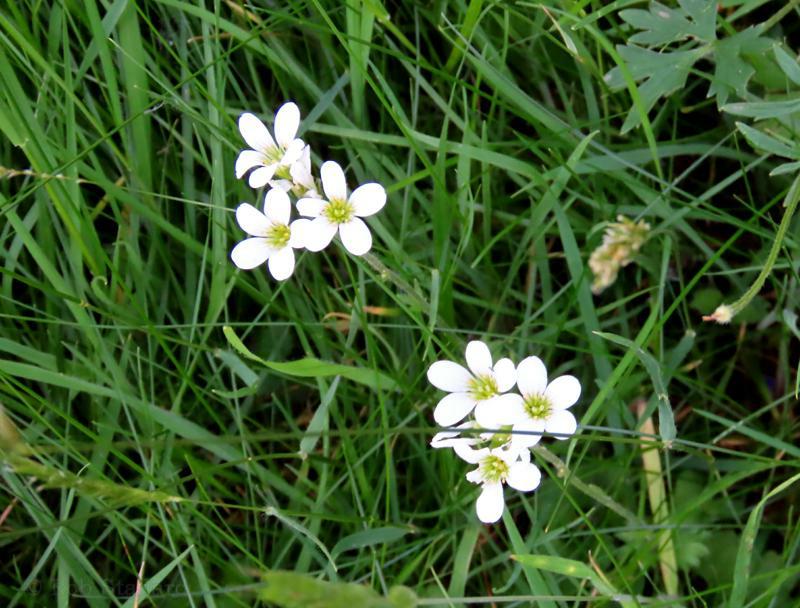
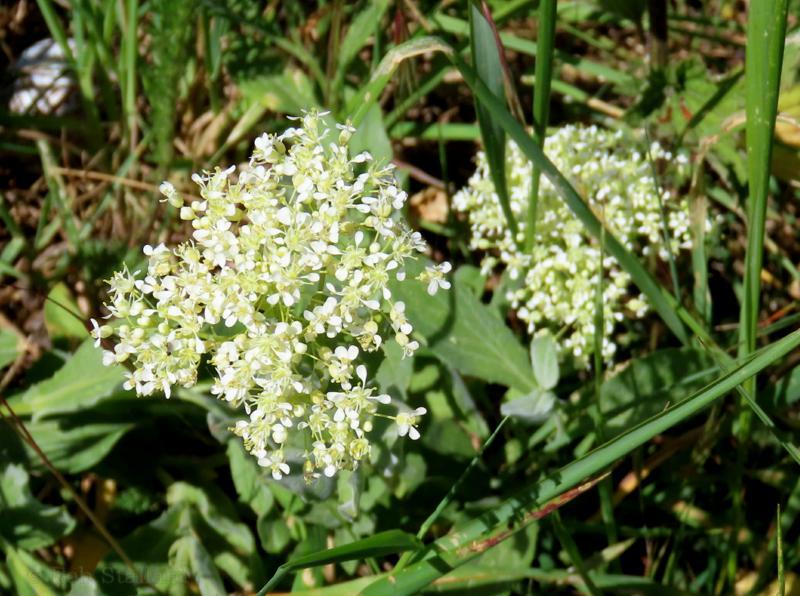
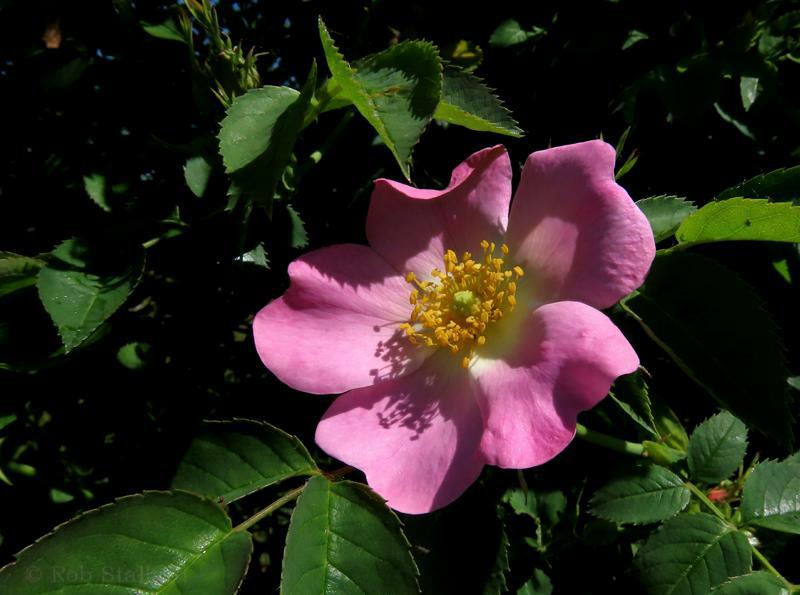
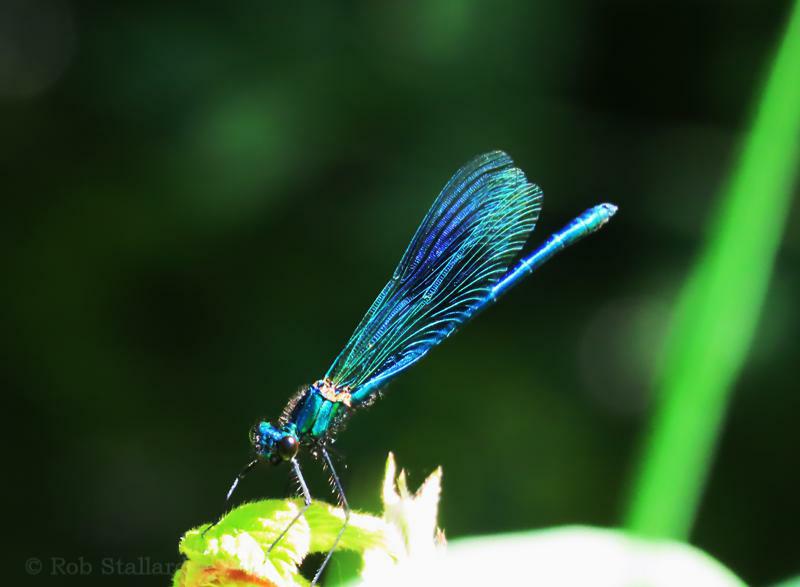
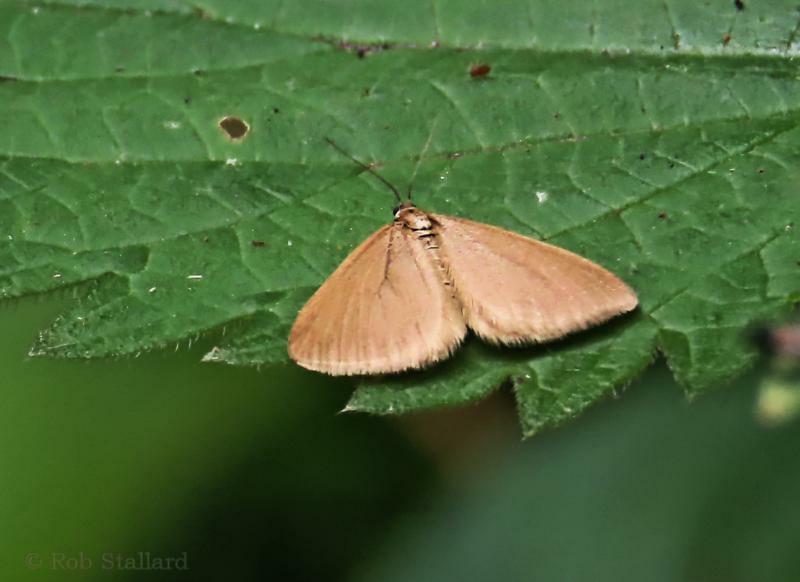
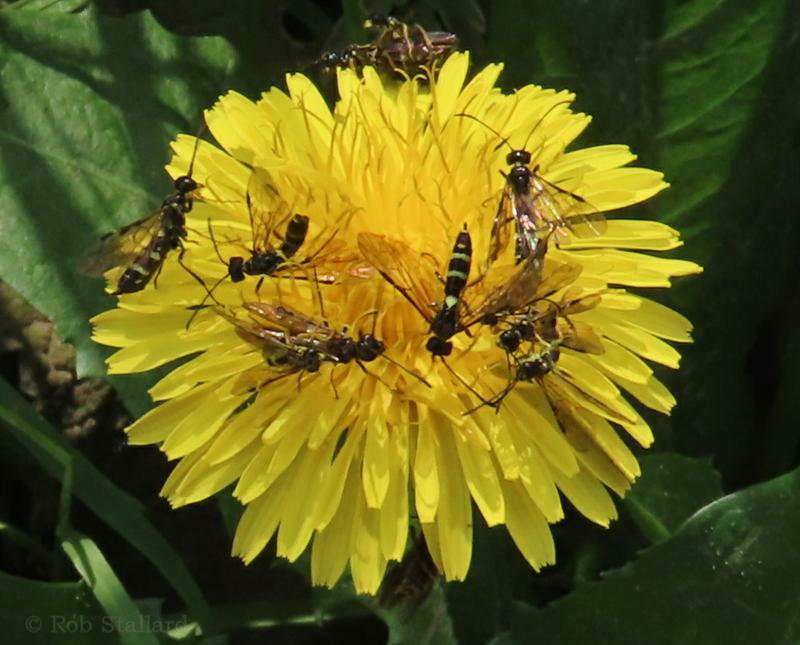
On the morning of Wednesday 21 May, Rob Stallard led a circular walk which started from the car park of the village recreation ground in Bucklebury. The weather forecast had warned of the possibility of showers, but these did not materialise and the temperature warmed as the morning progressed. House Martins flew above the car park and a Song Thrush sang loudly in the background. First stop was across the road in the churchyard of St Mary the Virgin. The churchyard is known for its display of Meadow Saxifrage in late spring, but most of the flowers had already gone to seed. Pellitory-of-the-wall was growing at the base of the church. The intricate Norman carving round the arch of the south door was admired. The route then led northwards, following a footpath across the meadow on the north side of the churchyard. Plants seen here included Lady’s Bedstraw, Meadow Buttercup, Common Sorrel and Common Bird’s-foot-trefoil. Wren and Chaffinch were heard. The footpath left the meadow near a bridge over the River Pang. Despite the very dry spring, the river still had plenty of water, due to the wet weather earlier in the year. The grey shape of a fish was seen against the Water Crowfoot growing from the stream bed. Flowering Comfrey was growing on the river bank. A Swallow flew overhead. Next, the lane crossed the village’s flood protection channel. Beaked Hawk’s-beard, Hoary Cress and Meadow Vetchling were all found in flower amongst the bankside vegetation, as were White, Red and a hybrid pink Campion. The lane climbed steadily as it continued northwards. The sound of the church bells rang out across the valley at 11am. On the right of the lane was a field with a wide conservation margin where Sainfoin and Field Madder were in flower. Beyond the planted margin was an arable crop. A Hare was spotted as it ran along the far edge of the crop. Bush Vetch, Wood Dock and Goat’s-beard were noted at the side of the lane and the songs of Garden Warbler and Whitethroat were heard. The webs of Ermine moth caterpillars draped a Spindle Bush. The lane changed to a track as it continued up through the woods. Big patches of Ramsons grew next to the track. Woodland plants included Wood Spurge, Wood Sage, Wood Speedwell, Common Figwort, Bugle and Yellow Pimpernel. Coal Tit, Blue Tit and Great Tit were heard. At the top of the hill, the route turned eastwards. Good numbers of Speckled Yellow moths flitted through clearings in the woods. A small patch of Japanese Knotweed was a worrying sight. Tormentil, Brooklime, Water-pepper, Marsh Thistle and a Speckled Wood butterfly were noted, and scattered Rhododendron bushes were in flower. A small unmarked moth which settled on a Nettle leaf next to a Wood Spurge plant (its caterpillar food plant) was identified as a Drab Looper, one of the specialties of the woodlands of the upper Pang valley. The track continued to the eastern boundary of the woodland, then the route joined another path which ran southwards just inside the woodland edge. Creeping-Jenny was found in a damp patch near the path. The leaves have rounded tips, unlike the pointed tips of Yellow Pimpernel which had been seen earlier. The path continued southwards to the end of the woods, then turned south-eastwards along the hedge line until it came to Pangfield Farm. After walking round the farm buildings, the group followed a track down to the River Pang. In a field to the right of the track were a Hare and two mares with young foals. The route then turned westwards, following a footpath which ran along the north bank of the Pang. Yellow Flag irises were flowering on the banks of the river. A big Guelder Rose bush on the river bank was covered in creamy white blossom. Skylarks were singing high above in the sky and a distant Yellowhammer was singing. A Peacock and a Green-veined White butterfly plus several Beautiful Demoiselle damselflies were seen along this section of the footpath. There were a few places where it was possible to get down to the water’s edge. The water was slightly cloudy and there was not as much Water-crowfoot on the river bed as one might expect to see. More plants were identified along the final stretch back to the start, including Hop, Great Willowherb, Black Horehound, Welted Thistle and Rough Chervil. Also seen were an Orange-tip butterfly, a scorpionfly and a Greenfinch. Afterwards, most of the group went to the Six Bells at Beenham for lunch.
Photos by Rob Stallard