12 members oF RDNHS plus one visitor joined some members of the Bees, Wasps and Ants recording society for a tour behind closed doors of the Cole Museum at Reading University, arranged by Dr Chris Foster the beetle expert. We divided into two groups to go round the museum and its storage and research areas with Claire Smith, the expert in charge of the care and conservation of fluid preserved specimens, and around the insect collection with Dr Foster.
The Cole Museum no longer accepts new specimens for display, but conserves and displays items from the existing collection, and has a larger reserve collection available for research and teaching behind the scenes.
Visitors to the main museum (free entry Mon-Fri) see fossils and reproductions showing the development of life on earth, and are welcomed in by the complete skeleton of Norman the 16 year old Asian elephant. The museum has a full description of his life in Liverpool where he was an attraction for local people and was advertised as doing amazing tricks such as hurdling, although elephants cannot jump.
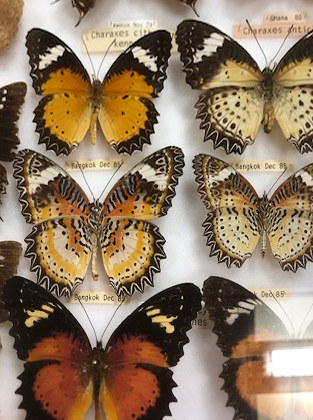
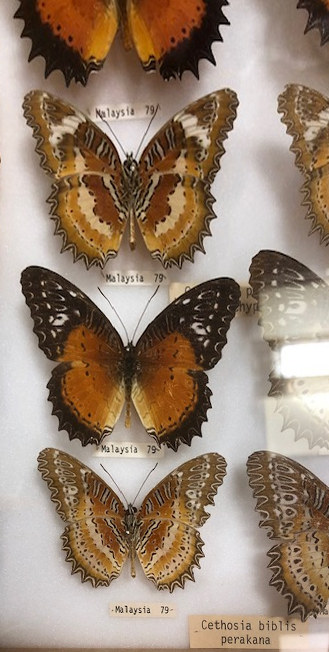
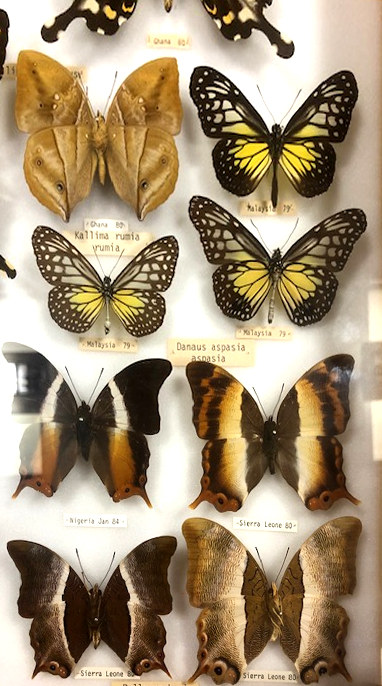
Behind the scenes are the storage areas for specimens not on show , including fossils, taxidermy, skeletons (with a skeletal head of a very large horse with all teeth intact and grinning) and fantastic detailed and beautiful green wax models of enlarged tiny marine life (that had a bad time with the heat this last summer). Another area houses pickled specimens with some display bottles containing beautifully organised specimens, such as a variety of hearts or a single fish, and other large jars of randomly stuffed specimens, such as tadpoles in different stages, which are held for student use. As in the main storage areas, the insect collection housed in the Philip Lyle building is a mixture of exhibition materials donated in the past and current student and research materials. Cases of exotic butterflies as well as those collected in the area over the last century or so; an unexpected specimen of a winged stick-insect; and recently produced boxes of mounted and labelled specimens from student projects done in the surrounding areas creating a modern record.
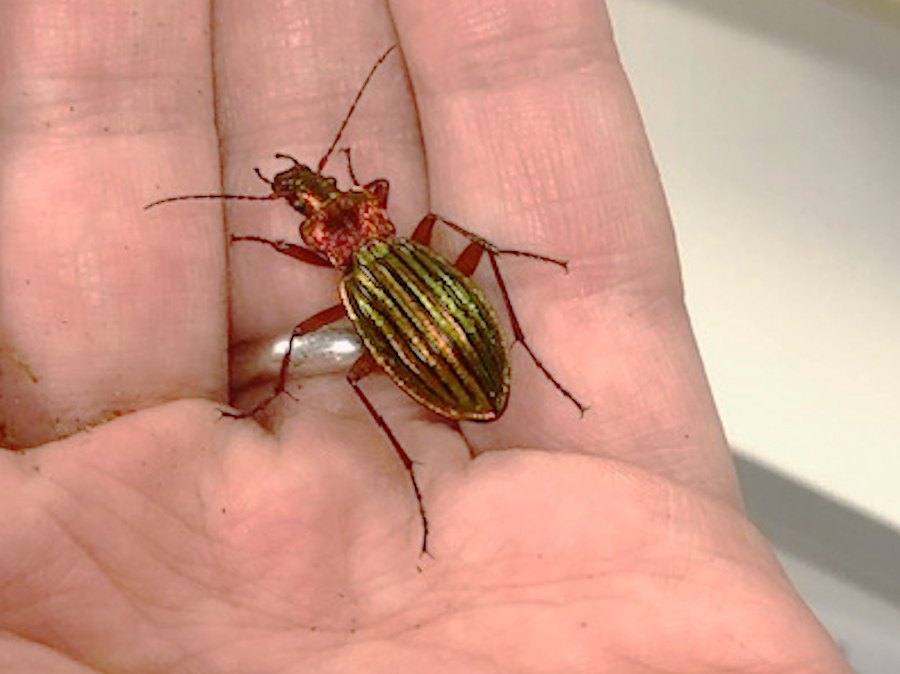
Finally, we met a beautiful (live) new gold-striped beetle, Carabus auronitens that had arrived from Europe and is living (but not expanding out of) an Oxfordshire wood. The university is researching its breeding habits.
Photos by Rachel Woolnough