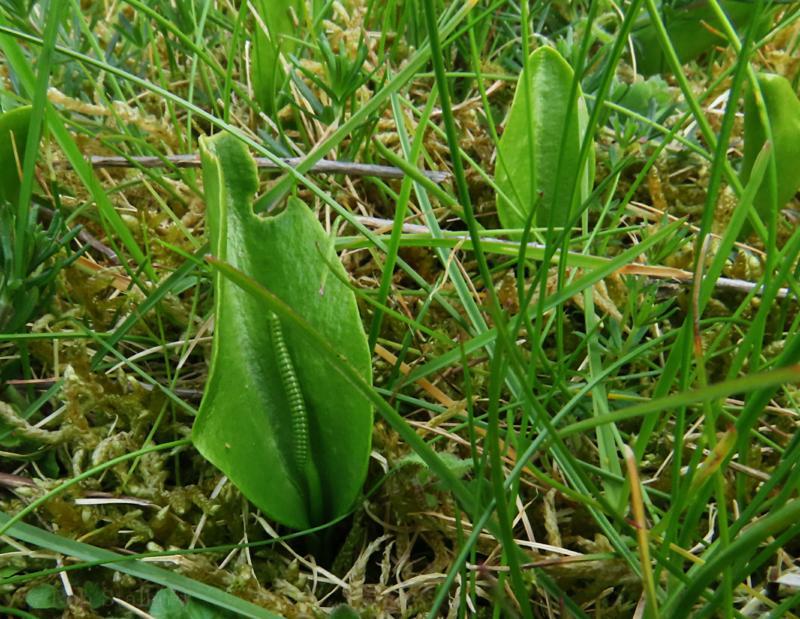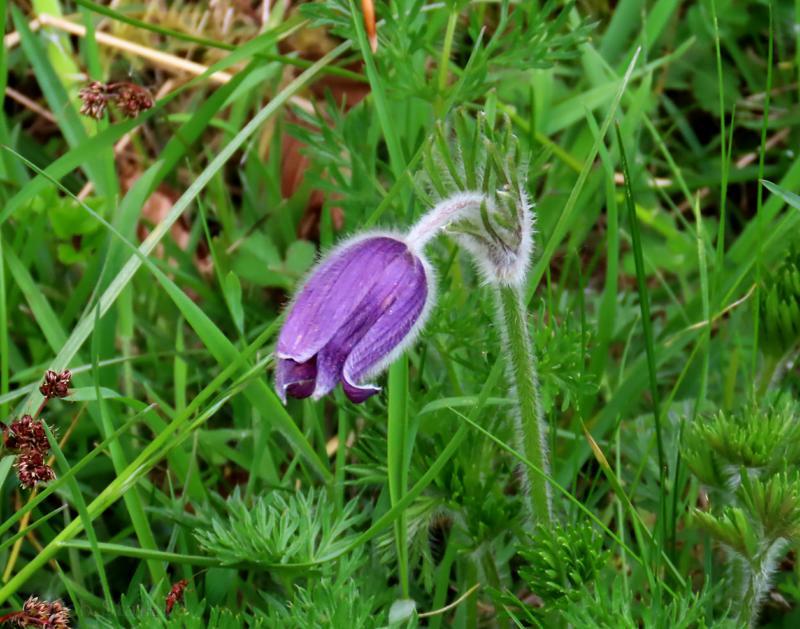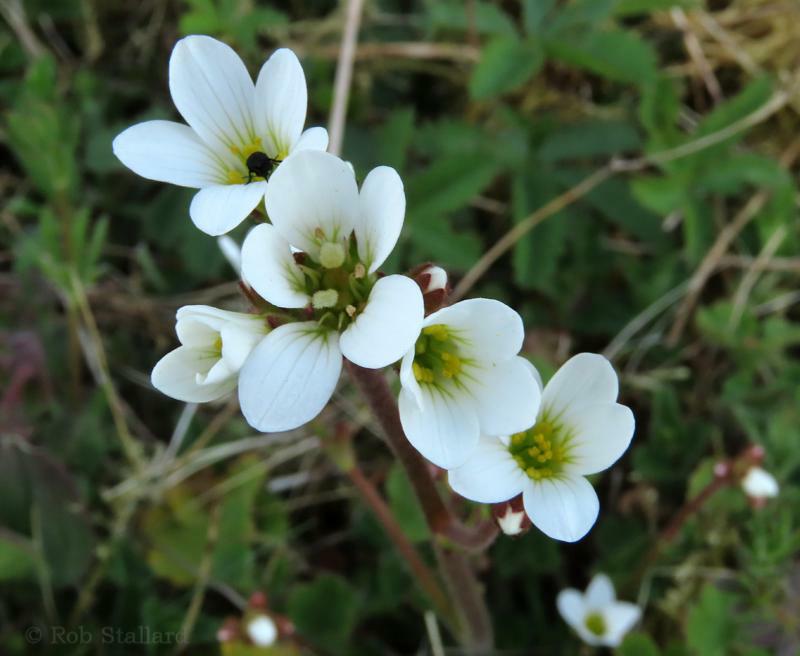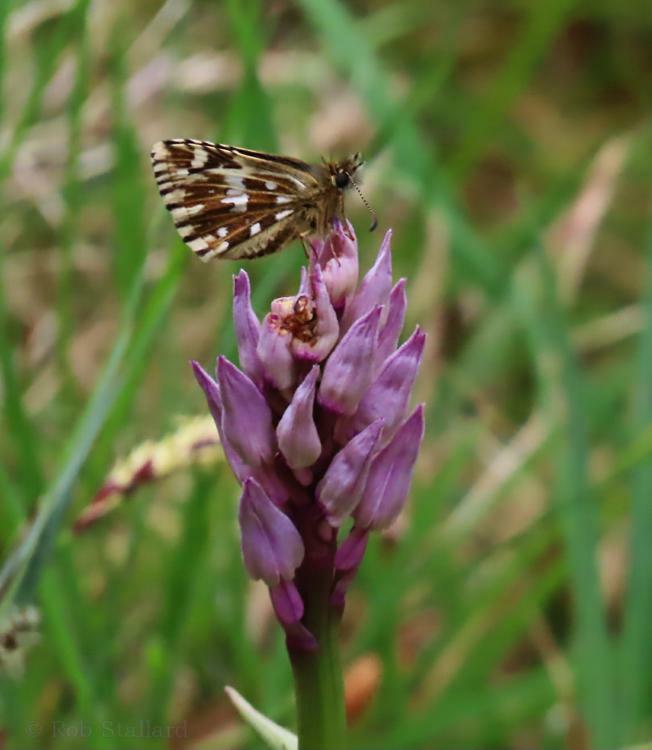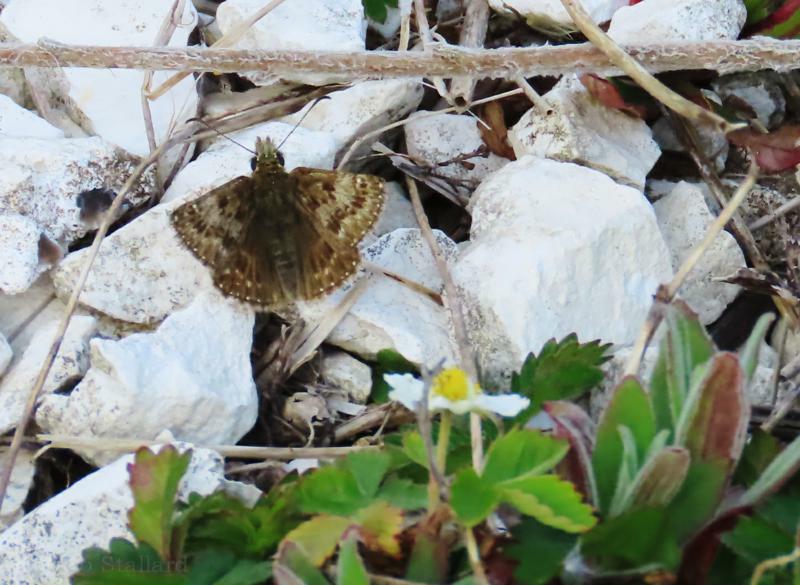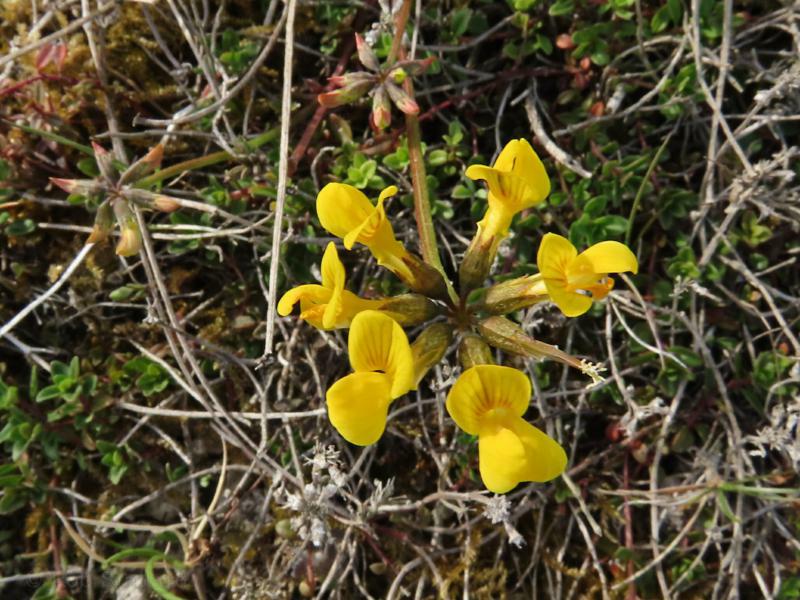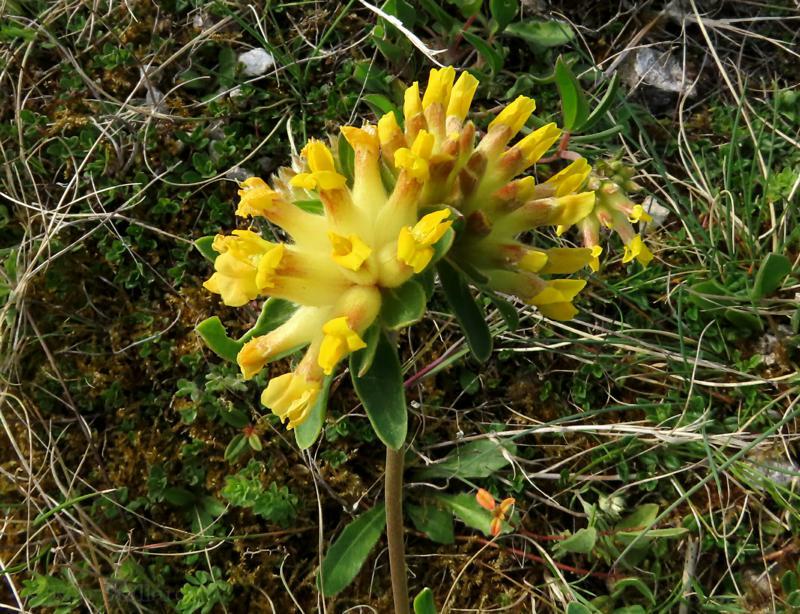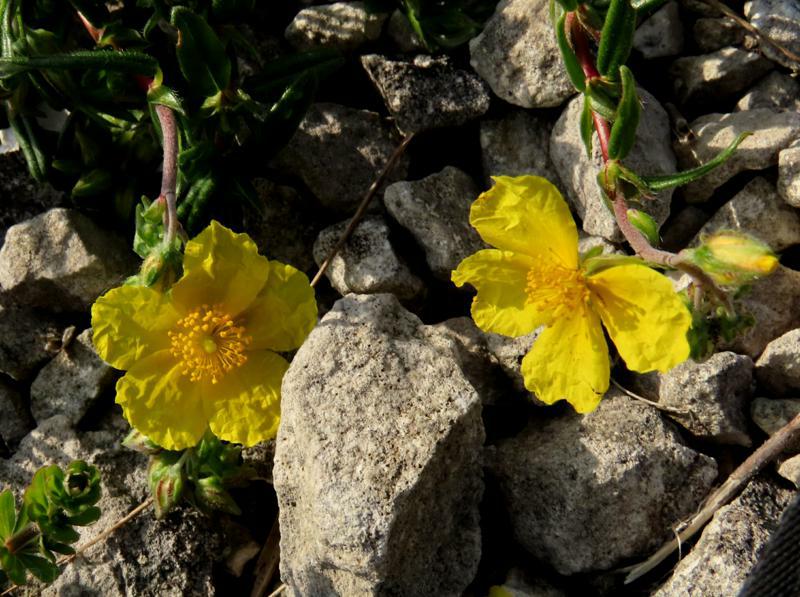
The Society would like to thank owner Suzanne for a fascinating and rewarding walk round her land near Medmenham on the afternoon of Sunday 27 April. After gathering in front of the farm buildings, the group set off up to the field above the barns, looking successfully for Adder’s-tongue Fern – a number of patches were found. Also seen nearby were Lady’s Bedstraw and Yellow Rattle. On the opposite slope, Horseshoe Vetch and Meadow Saxifrage were protected with metal cages from browsing animals. Hairy Violets were found here. A new population of Military Orchids is becoming established in the field – there are currently 7 plants with the characteristic 3-way arrangement of leaves. These too are protected with cages from browsing deer, rabbits, etc. Up at the top of the field, Slender Bedstraw was growing along the fence line and there were a few Pasqueflowers. Passing through a gate, flowering Twayblade and more Adder’s-tongue Fern were seen. The next field is known as ‘the potato field’, because it had been dug up and planted with potatoes during World War II. Earlier in the spring, there had been a splendid display of Primroses here. Bluebells and Dog’s Mercury are gradually spreading back into the field. Other plants seen included Ploughman’s-spikenard and Common Figwort. There is also another Military Orchid which looks as if it will not be flowering this year. A Grizzled Skipper was resting with wings together on top of the flower head of a pink-flowered orchid with spotless leaves which was not yet fully out. There was a debate over its identity – Early-purple Orchid was one suggestion but Military Orchid was also thought to be a possibility. The path led on into Beech woodland where there was a carpet of Bluebells stretching as far as the eye could see. Dotted amongst the Bluebells were flower heads of Yellow Archangel, Wood Spurge, Greater Stitchwort and Hairy St John’s-wort. A Red-headed Cardinal Beetle was spotted on a Yellow Archangel flower. Two Brimstones flew past in their spiralling courtship dance. Other butterflies included Peacock, Large White and Orange-tip. The route crossed a public footpath and led into a field which had been sown with a wildflower mixture. Cowslips, Salad Burnet and Common Bird’s-foot-trefoil were amongst the flowers here, with the latter the caterpillar food plant of the numerous Dingy Skippers. Also seen were a few more Grizzled Skippers and a Small Heath. Three scrapes had been dug at the top of the field. Initially rabbits did a lot of damage here, but once it had been securely fenced in 2011, Horseshoe Vetch, the caterpillar food-plant of Adonis and Chalkhill Blue butterflies, and Kidney Vetch, food-plant of the Small Blue, were able to flourish. Meadow Saxifrage, Common Milkwort, Meadow Vetchling, Lady’s Bedstraw, Carline Thistle, Harebell and flowering Common Rock-rose were all seen in the first scrape. The second scrape had both Kidney Vetch and Horseshoe Vetch in flower, with Chiltern Gentian expected to flower later in the year. Competing grass had been carefully removed from the scrape. As a result, there were dense clumps of the leaves of Kidney and Horseshoe Vetch. The third scrape had Common Rock-rose, Carline Thistleand Pasqueflower. On the walk back to the start, a Peacock and two Comma butterflies were seen on nettles. Finally, a Swallow was seen by the farm buildings.
Photos by Robert Stallard