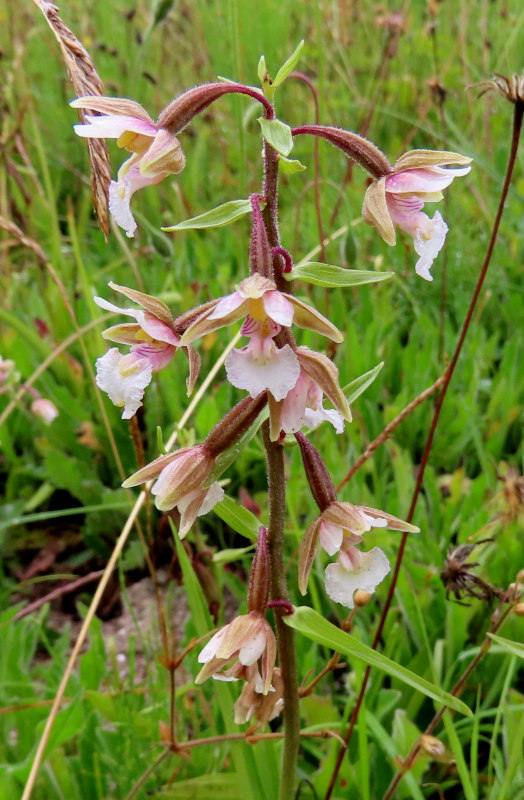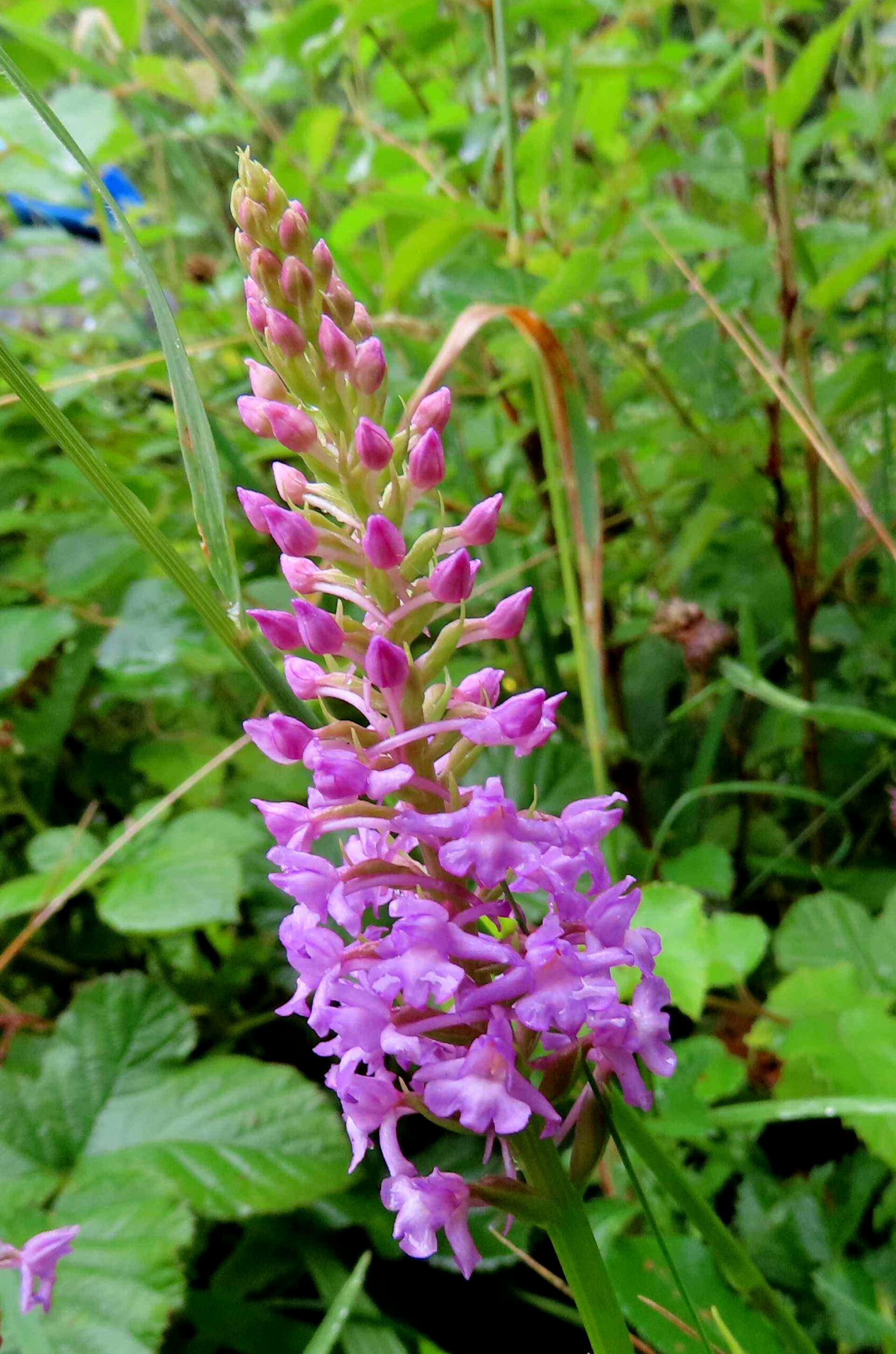
Julia Cooper and Ian Duddle led a walk at Greywell Moors near Hook on the rainy morning of Sunday 20 July, starting at Greywell Pumping Station. The fen area in the north-eastern section of this Hampshire and Isle of Wight Wildlife Trust reserve has permit-only access and Reserves Manager Zoe Cotton kindly came to open the gate and give 13 members an update about management of the reserve. Zoe led the group along the narrow path through the first meadow which had a rich mix of tall fen vegetation, including Meadowsweet, Purple-loosestrife and Hemp Agrimony, and Common Knapweed, Common Bird’s-foot-trefoil, Eyebright and Common Fleabane. In the second smaller meadow there were Marsh Helleborines Epipactis palustris, slightly past their best after the recent hot weather, and Marsh Fragrant-orchids Gymnadenia densiflora. They then moved into the second small field, where Southern Marsh-orchid Dactylohriza praetermissa and many Marsh Fragrant-orchids were found. Moving on through a wooded area a Common Twayblade and Broomrape in fruit were spotted.
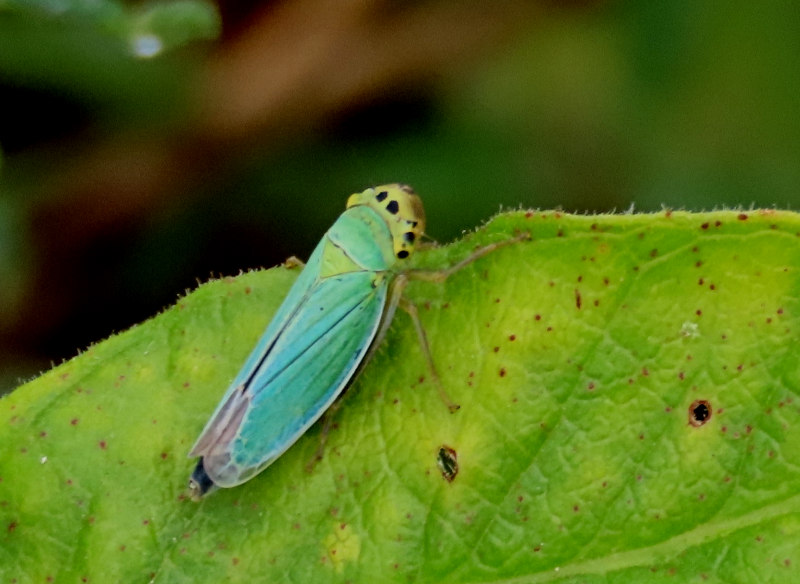
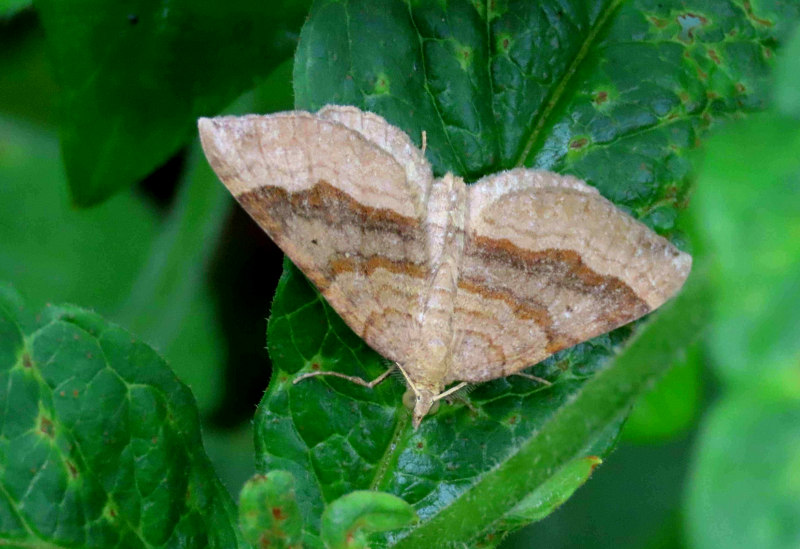
The third field had a wonderful display of flowers, with many more Marsh Helleborines and Marsh Fragrant-orchids at their best in form and fragrance. A marsh orchid in fruit, probably Southern Marsh orchid, was also found. This part of the reserve was formerly used for dumping lime spoil, so has flowers typically seen on Chalk grassland growing near wet fen vegetation. The Fen Bedstraw Galium uliginosum was identified by the mucronate tips to the leaves and the backward-pointing prickles on the leaf margins, the whole plant feeling very rough to the touch. Imperforate St John’s-wort Hypericum maculatum with a square stem and leaves lacking perforations was also identified along with Square-stalked St John’s-wort H. tetrapterum, a white-flowered form of Common Knapweed and Greater Bird’s-foot-trefoil. The northern marshy part of this meadow was particularly rich in invertebrates, including abundant Green Leaf Hoppers Cicadella viridis, 2 rarely recorded Ichneumon wasps, Heterischnus truncator and a Cryptinae sp., a Four-banded knapweed gall fly Urophora quadrifasciata, Straw dot Rivula sericealis and Shaded Broad-bar Scotopteryx chenopodiata moths, and an Amber snail Succinea putris which inhabits waterside vegetation. Butterflies seen in the northern part of the reserve included Green-veined, Small and Large White, newly emerged Brimstone and Peacock, Marbled White, Small Skipper, Red Admiral, Comma, Ringlet, Gatekeeper, Speckled Wood and Meadow Brown. After inspecting a large Water Figwort plant with a 7-Spot Ladybird by the gate, the group crossed Deptford Lane to the very different southern part of the reserve. Cows with GPS collars were grazing the short grass. Zoe explained that the cattle are trained to stay within a virtual fence, and are locatable on her mobile phone, which is particularly helpful when they are in the other areas of scrub and wet woodland. Having checked the herd Zoe left the group to carry on through the reserve. A Kestrel perched on the wires, showing off its yellow feet and legs. The route then continued alongside the River Whitewater towards the mill pond, with Purple-loosestrife, Meadowsweet and Greater Tussock-sedge along the river edge.
Just before Greywell Mill flowering Hedge Woundwort Stachys sylvatica, Marsh Woundwort S. palustris and their hybrid Stachys x ambigua were found. They had been identified at this site on a previous RDNHS visit. Further on along the boardwalk emerald green male Banded Demoiselles were flying, and a Signal Crayfish was spotted emerging from under a log. After passing through the churchyard the footpath crossed a field with a herd of heifers and a bull. In response to a sudden heavy shower the heifers gathered together and raced towards the shelter of some trees. The walkers continued at a steady pace into Deptford Lane, crossing the river before arriving back at the pumping station. Some then enjoyed lunch at the Fox and Goose.