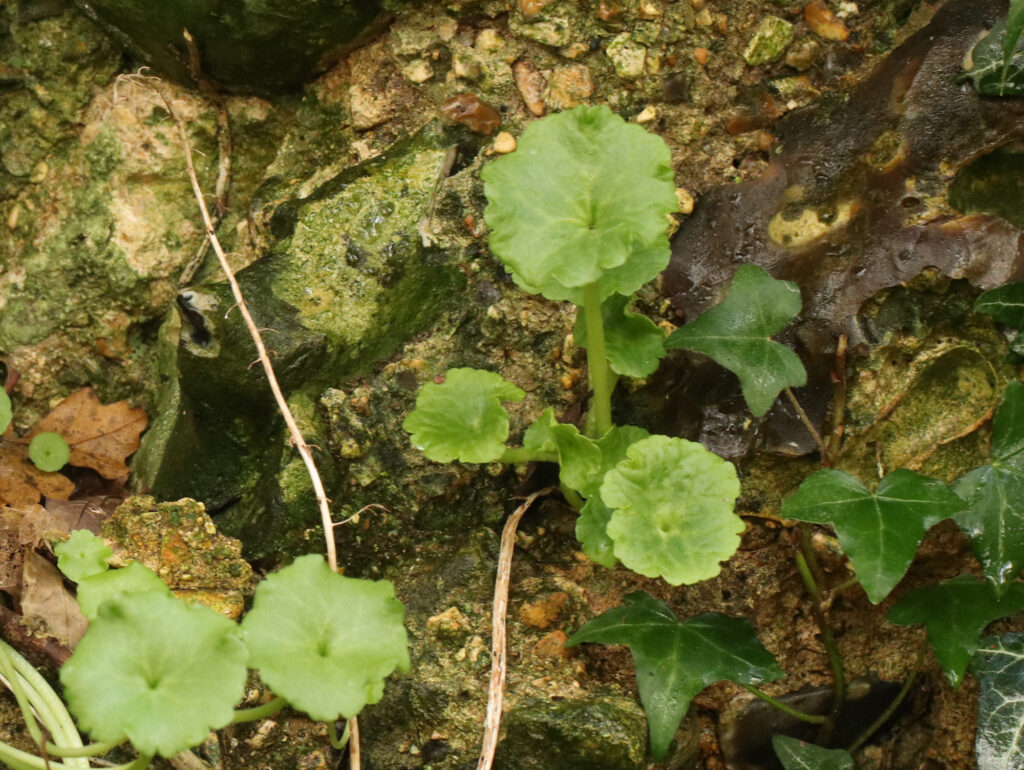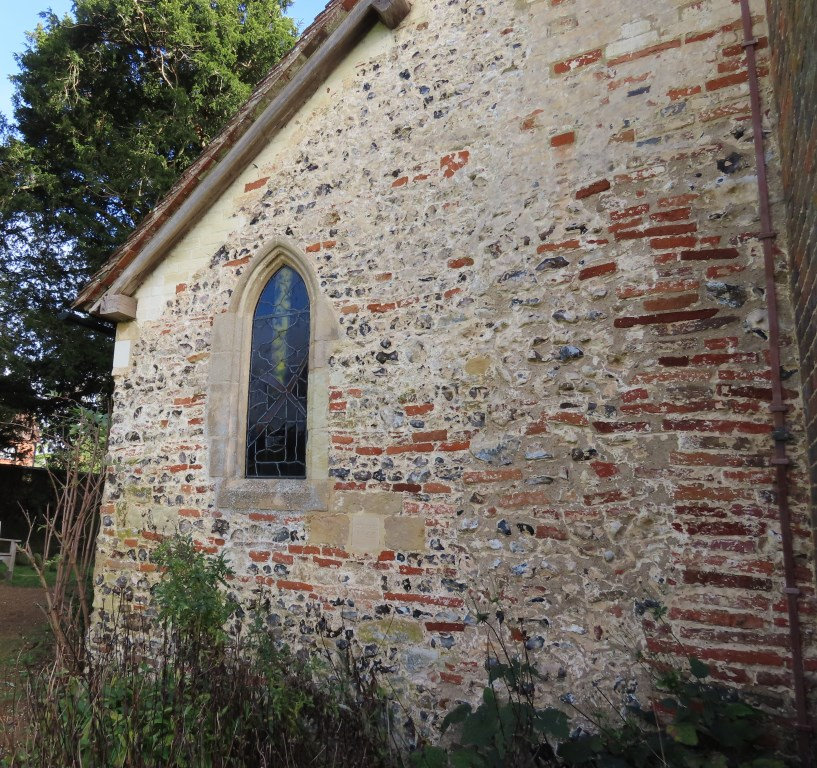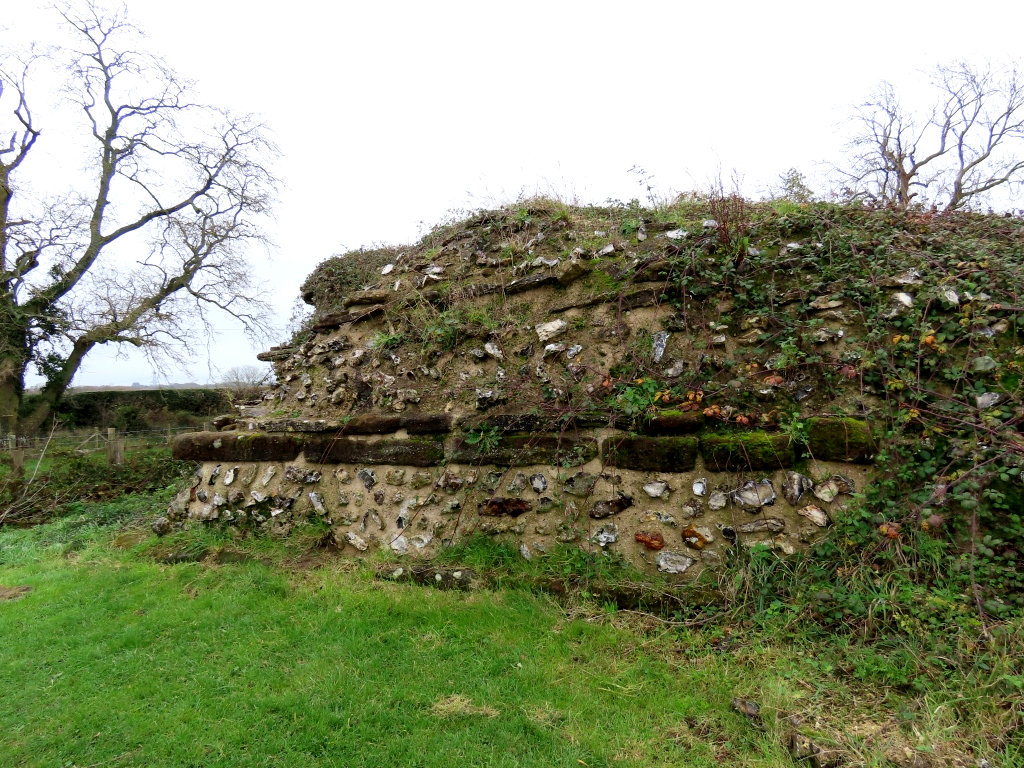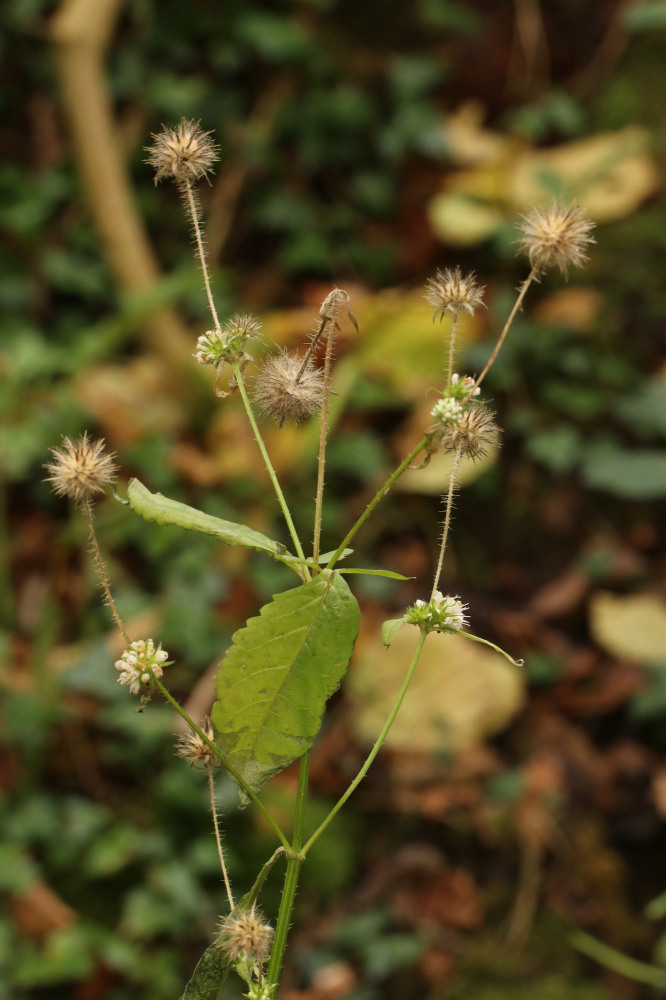
Sue White led a walk round the Roman walls at Silchester on the morning of Saturday 30 November. It was a mild, damp, dull day with grey cloud cover. Members gathered in the official English Heritage car park off Wall Lane. From there, a footpath led to the Roman walls. A male Kestrel, with grey head and chestnut back, was perched at the top of a tree which overhung the footpath. The route led clockwise round the walls, starting out along the north wall of the Roman town. Volunteers had been clearing brambles and scrub from in front of the walls. They were cutting the brambles back to about a foot above the ground, creating a trip hazard which would discourage people from going too close to the walls. A member had asked us to check if we thought they were damaging the walls and their associated wildlife. The consensus of the group was that they were improving things. Turning into the north gateway, members were able to inspect closely fragments of the original wall. Lime mortar had been used. Flints would have been used as a filler material. Mosses on the wall included Silky Wall Feather-moss Homalothecium sericeum, Common Feather-moss Kindbergia praelonga and Cylindric Beard-moss Didymodon insulanus. A few of the flints which had been incorporated in the wall were a reddish-brown colour, caused by burning. The Kestrel which had been following the group round perched on a telegraph pole which overlooked the north gateway. Also seen here were a Buzzard perching in a tree and a Pied Wagtail. Other birds noted near the north wall were a Grey Wagtail and a calling Raven. Continuing along the north wall, flowering plants included Great Mullein, Hedge Mustard, Musk Mallow, Field Scabious and Blue Fleabane. Marsh Thistle was in flower in the field to the north of the wall. Back up at the top of the wall, a massive old Ash tree was growing with its roots tangled into the wall. Next target was the Roman amphitheatre at the north-east corner of the site. A member with a good memory recalled that Three-cornered Leek had been seen here on a previous visit. It appeared to be spreading rampantly above the far side of the amphitheatre. The route then led along Wall Lane to the church of St. Mary the Virgin. The church walls were inspected for Roman era stones. Layers of thin Roman-period tiles were spotted at one repair site and thin Roman bricks had been used at another site. The walk continued round the southern section of the walls. Volunteers had just cleared the path from the church to the walls, so members were the first to benefit from the newly cleared section. A stream which drained the Roman town ran under the wall. Not far upstream there had been Roman baths with hypocaust etc. The route ran on top of the south-facing wall. The small fern Wall Rue was spotted in this section, together with a spleenwort, Pellitory-of-the-wall, Upright Hedge-parsley and Mouse-ear Hawkweed. At the next gateway, the route crossed to the outer side of wall, which looked much higher than the inside, where the group had been walking before. The western side of the walls runs through a strip of woodland. Here one of the botanical highlights of the morning, Small Teasel, was found. There were a number of plants between the path and the walls. Most had seed heads, but a few still had small flower clusters. Nettle-leaved Bellflower was also found in flower here and Soft Shield-fern was seen. This section of the walls was draped in Ivy, apart from one small area, where a big patch of Navelwort was growing on the wall. A Nuthatch was heard calling here. The path completed its circuit of the walls and the final path led back to the car park.
Attended by 12