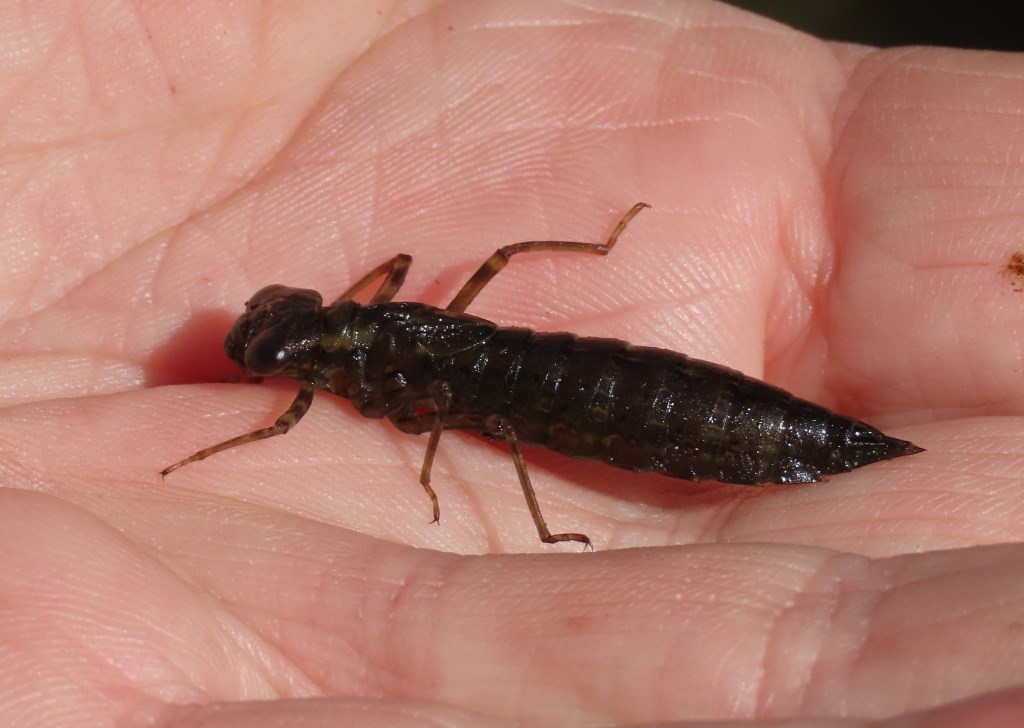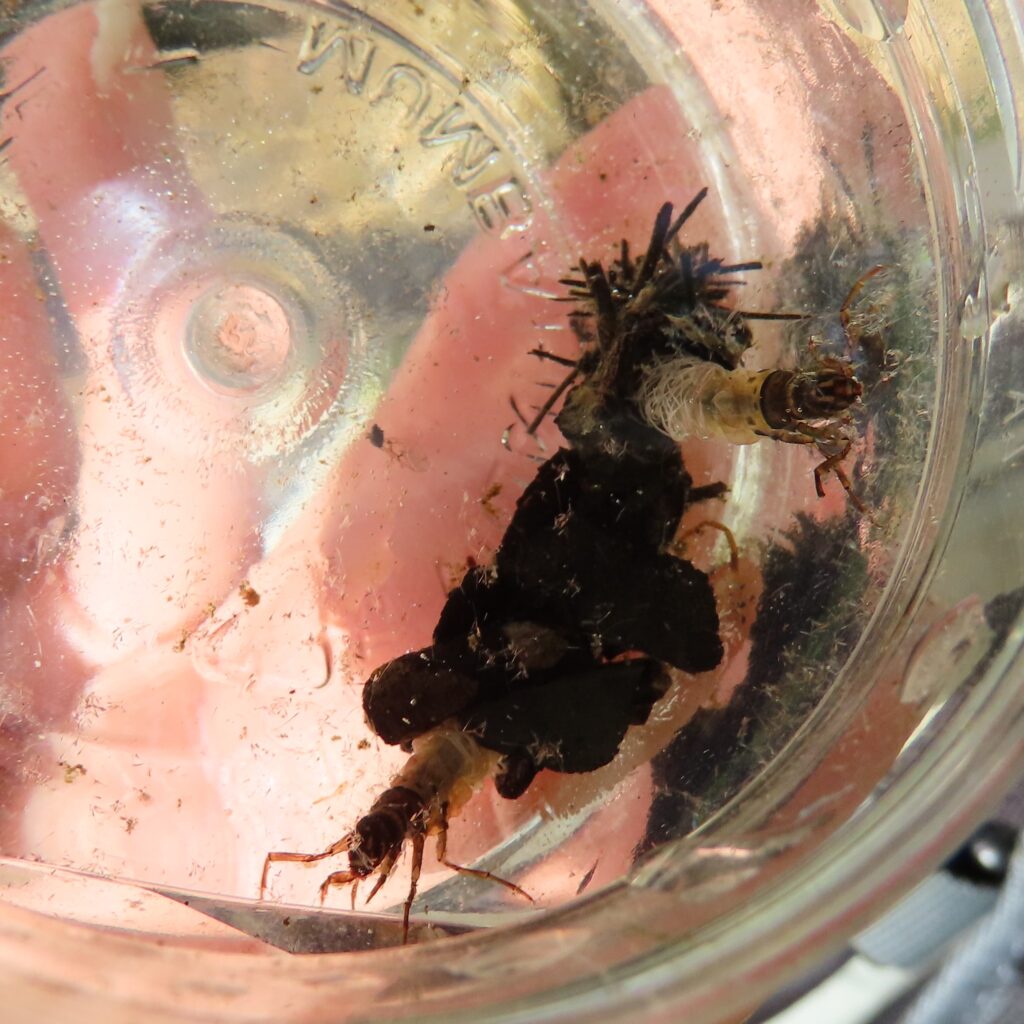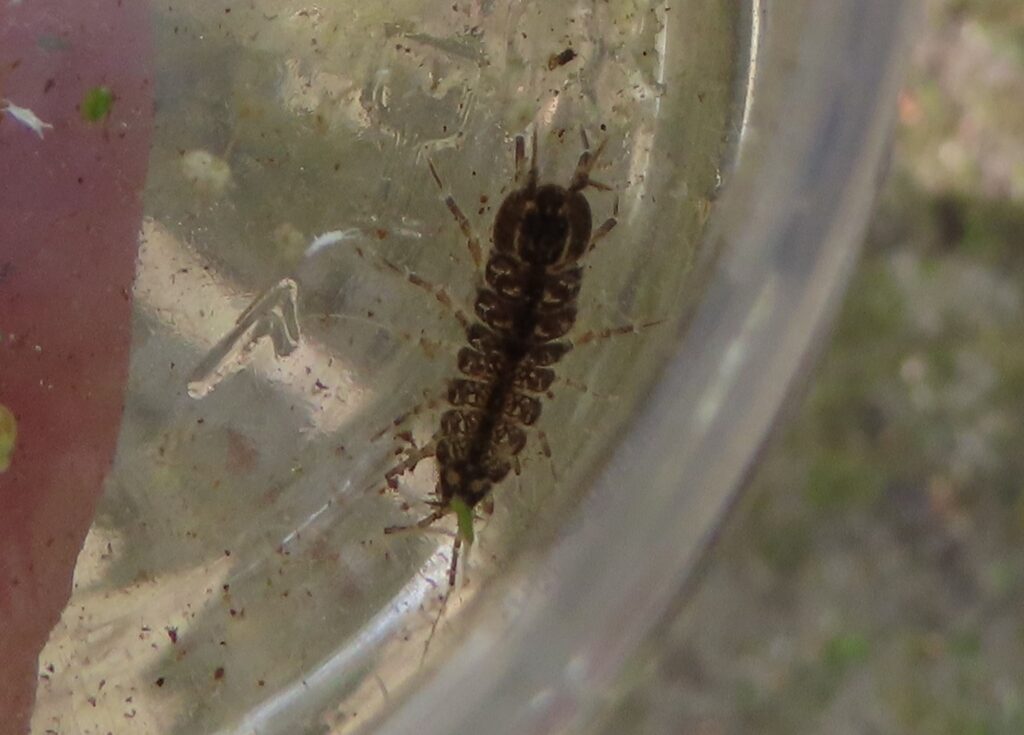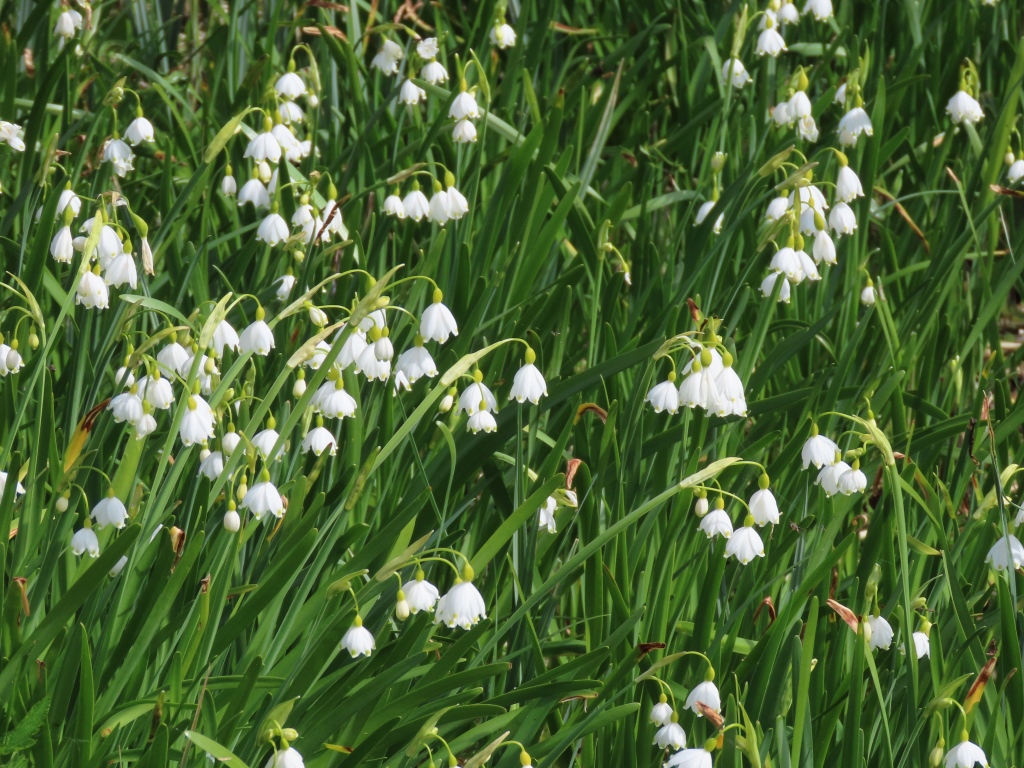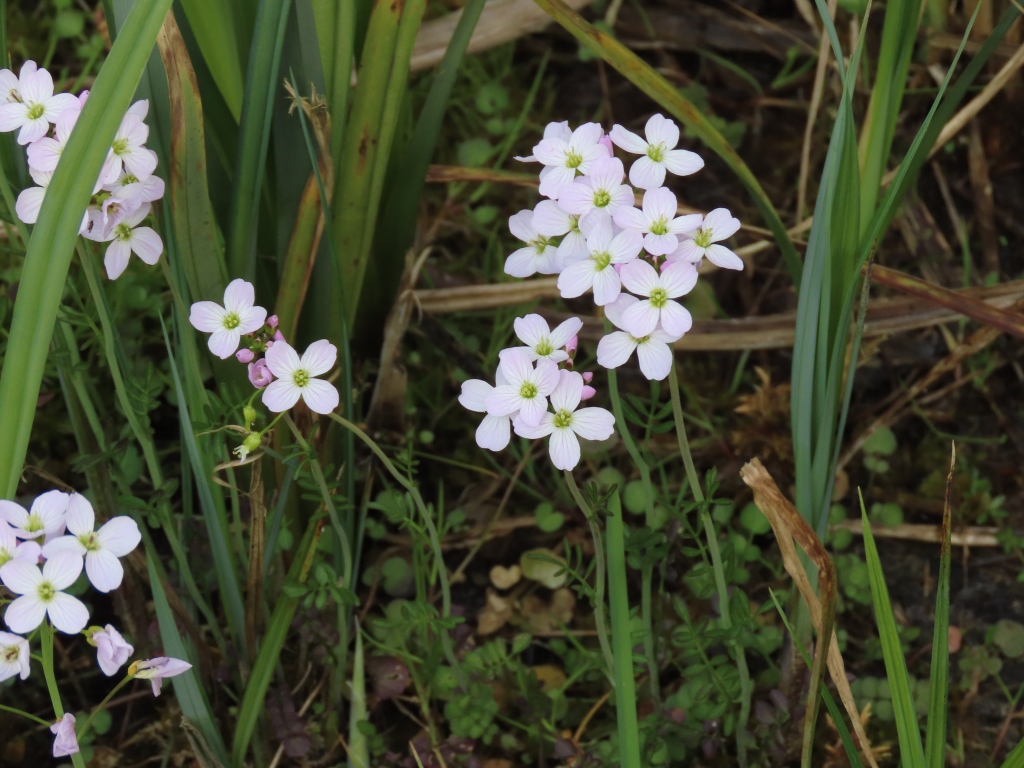
Alan Holmes organised a pond dipping session at Withymead Reserve, between Goring and South Stoke, on the morning of Saturday 12 April. Alan’s principal aim was to find dragonfly and damselfly larvae. Warden Pete Morton accompanied the group on their walk round the reserve. The first pond, with a pH of 6.8, was by the study centre and the car park and it was where the only dragonfly larva of the morning was found. It was the larva of a Southern Hawker dragonfly. Tiny wing buds could be seen on its back, near its back legs. These indicated that it was in its final stage before hatching. Other creatures found here included the larva of one of the diving beetles, a Lesser Water Boatman and a Back-swimmer. The rest of the ponds had a pH of about 7. The group then walked down through woodland to the second pond, passing the yellow flowers of Yellow Archangel and spikes of Lords-and-ladies. Nearer the river was a marshy area which was covered by a sea of Loddon Lilies, all fully in flower and close to their best. Gypsywort and Brooklime were seen, while Wren, Chiffchaff and Cetti’s Warbler were heard. Wildlife found at the second pond included several Waterlice Asellus (shrimp-like crustaceans), a leech, a Great Ramshorn snail and two Caddis flies. The latter had built impressive homes with stones and bits of twig. Every so often, the Caddis fly would poke its head out of its tube-like dwelling. On the other side of the track was a pond whose surface was covered by a blanket of Duckweed. Very little aquatic life was found here – several Annelid worms, a leech and some Ramshorn snails. The path continued to the bank of the River Thames, where the pH was measured as 8.4. Turning right, Common Pond Snail and more Caddis fly larvae were found in the next pond. Flying insects included the Drone Fly Eristalis pertinax and aDark-edged Bee-fly Bombilius major. The route then followed a boardwalk through an area of marshland. Cuckooflower was in flower here. In summer, Yellow Loosestrife flowers can be found here, providing oil and pollen for the Yellow Loosestrife Bee. It uses the oil to waterproof its nest. Also seen here, not in flower, were Meadow-rue, Meadowsweet and Common Valerian. A branch of the board walk leads to the Kingfisher Hide which overlooks a quiet backwater of the Thames. Warden Pete regularly sees Otters here. As the day warmed up, butterflies began to appear, starting with a Peacock and a Brimstone.
The boardwalk then turned to the right and headed away from the river. Most of the marshy area on the reserve is wetted by spring water and dominated by Greater and Lesser Pond Sedge, with Common Reed thriving in certain parts more than others. Along the final section of boardwalk, the dominant vegetation on the left, ie the north side, changes to Reed Sweet Grass Glyceria maxima. This is due to the change in nutrients and pH as a result of the stream that inundates the compartment with run-off from farm fields. Green Woodpecker and Sparrowhawk were recorded here. The final section of the walk led through woodland, where there was plentiful Red Currant.