On the afternoon of Sunday 14th September six intrepid naturalists met in the car park at Watlington Hill, a Site of Special Scientific Interest and a nationally important home to rare wildflowers, butterflies, birds, mosses, lichens, and fungi. Watlington Hill is managed by the National Trust. Led by Fiona Brown, the plan was to follow a circular walk around the hill. However, it was pouring with rain and the weather forecast promised wind gusts of up 35 mph. So, it was decided to shorten the walk. Going west through a small wood a few early fungi were spotted amongst the leaf litter. A Hawthorn tree had large berries which may be an indication that the tree was a non-native species originating in Southern Europe. Continuing along the open ridge, the beautiful view across South Oxfordshire was reduced by the rain and the grassy paths were close-cut by rabbits which hide until dusk to avoid the Red Kites.
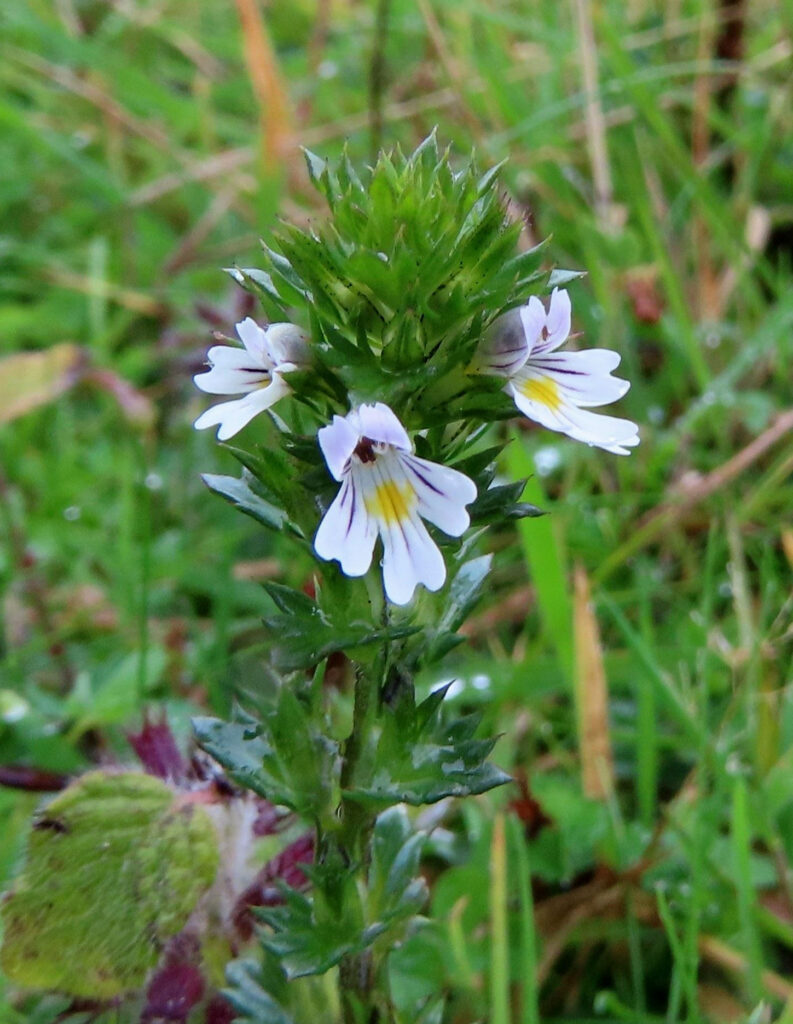
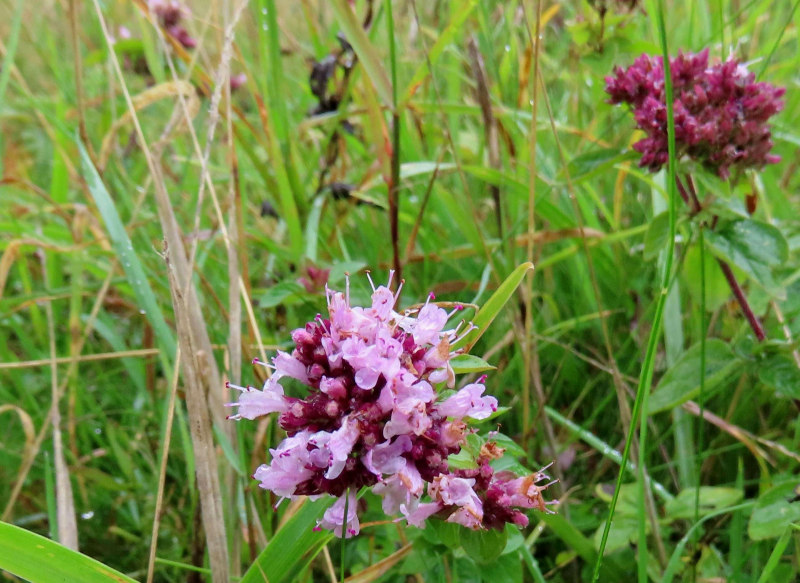
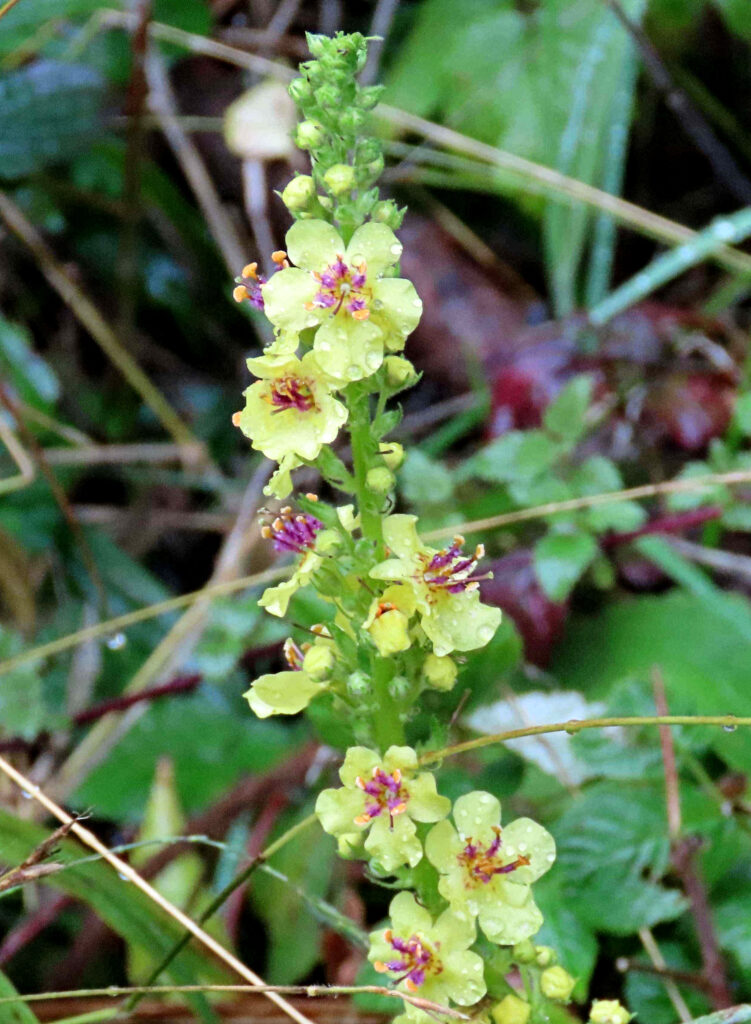
For a while the rain abated enabling some botanising. The undergrowth beside the paths is cut by volunteers each year and the cuttings are removed to avoid a built-up of nutrients. This helps chalk specialist plants to outcompete other species. Unfortunately, the long dry summer had stunted growth, and most plants were much shorter than expected. Wild Marjoram Origanum vulgare was present in abundance and other plants found included Dark Mullein Verbascum nigrum, Wild Basil Clinopodium vulgare, Red Bartsia Odontites vernus, Eyebright Euphrasia spec., Field Scabious Knautia arvensis, both Hedge Galium album and Ladies G. verum Bedstraw, Agrimony Agrimonia eupatoria,
Hop or Lesser Trefoil, Trifolium campestre or T. dubium, Dwarf Thistle Cirsium acaule, Common Centaury Centaurium erythraea, Harebell Campanula rotundifolia, leaves of Salad Burnet Poterium sanguisorba, and Yellow-wort Blackstonia perfoliata, which was widespread.
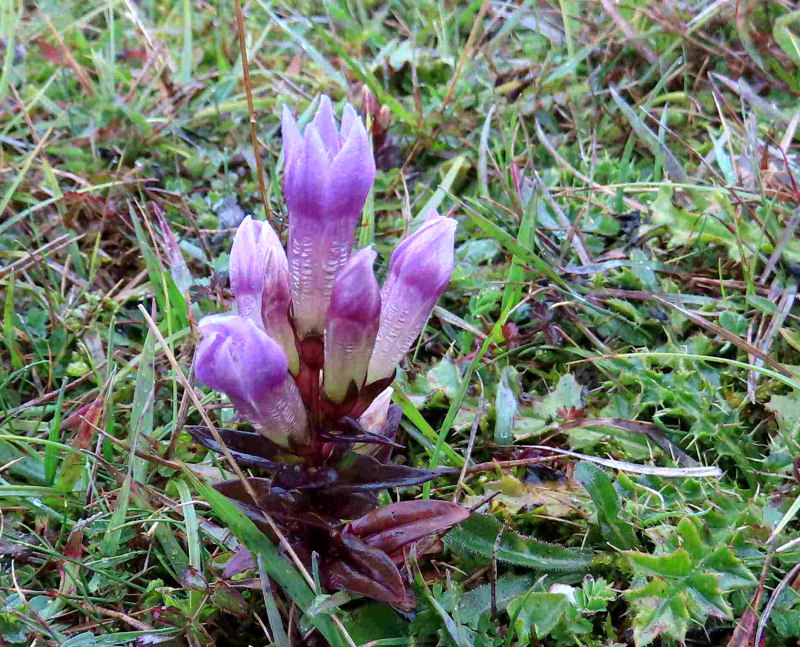
A Raven croaked as it flew past, but surprisingly few Red Kites were in evidence. Further along the ridge the path widened out. Here were found Yellow Meadow Ants’ nests covered in Wild Thyme Thymus polytrichus, and vegetative Common Rock-rose Helianthemum nummularium. Sheltered between the ant hills were Gentians including one patch of seven plants. They were still in bud so difficult to identify. However, one much smaller plant was probably an Autumn Gentian Gentiana amarella and suggested that the rest were either Chiltern Gentians G. germanica or Chiltern x Autumn hybrids. Heading northwest above the White Mark of Watlington the group made their way downhill through Gorse bushes with a large stand of Yew trees to the left. This led to the west-facing slope of the hill where Vervain Verbena officinalis and Clustered Bellflower Campanula glomerata were seen during the pre-walk. Turning right the group began heading back uphill noting leaves of Hairy Violet Viola hirta, small but flowering Blue
Fleabane Erigeron acris and a clump of inkcaps beside the path. Near the top there was a clump of Rosebay Willowherb Chamerion angustifolium, with most of their hairy seeds already released they were looking a bit dilapidated. By now the view had disappeared behind a thick curtain of rain and the wind was increasing so it was time to return to the car park where a clump of fungi (possibly a Mottle Gill species) was spotted.