Jan Haseler led 7 members on a walk at The Holies, National Trust land at Streatley, on the morning of Saturday 7 June. The weather forecast had predicted heavy showers, with the Met Office issuing a yellow weather warning for thunderstorms. There was some debate the night before as to whether or not the event should be cancelled, since the walk in and out of The Holies goes through woodland. It was announced on the website that a decision about whether or not to go ahead with the walk would be made at 9am on the morning of the walk. But next morning, the start of the weather warning had been moved to later in the afternoon, so the decision was made to go ahead. Apart from some light drizzle, the morning turned out to be dry and thunder-free. Walkers assembled at the National Trust car park at the top of Streatley Hill, then crossed the road and set off eastwards along a track through woodland. The top of the site lies on Clay-with-flints. The track led to Top Field, an open area with acid grassland which was yellow in parts with big clumps of Common Bird’s-foot-trefoil. Other flowers seen here included Common Milkwort, Heath Speedwell, Cat’s-ear and Mouse-ear-hawkweed. Meadow Brown, Marbled White and Small Heath butterflies were also seen. A path led down through two gates to Middle Field, a big area of chalk grassland which still showed the outline of the motor-cycle scramble tracks which were made in the 1980s. The scramble tracks had been worn down to bare chalk. It was thought at the time that the site had been trashed. But now turf has grown back and many of the rarer
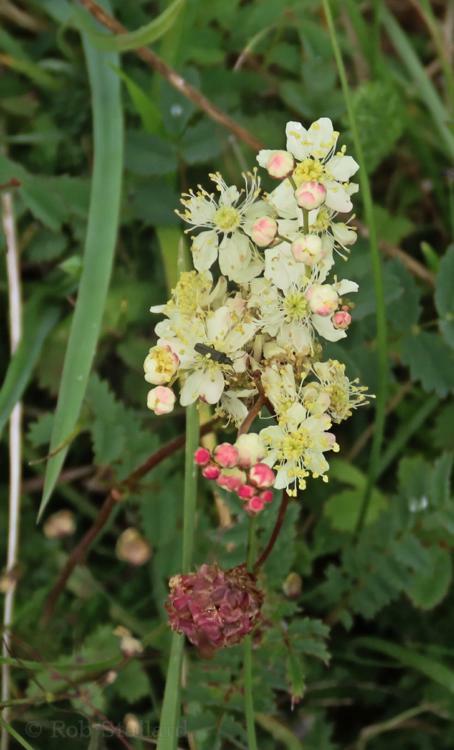
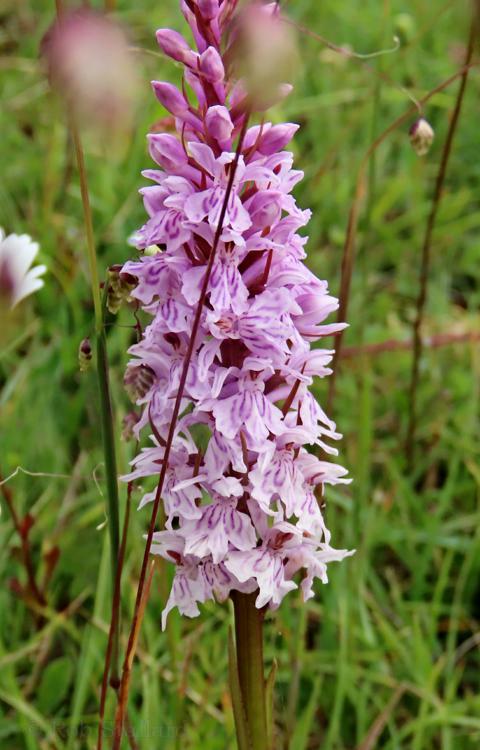
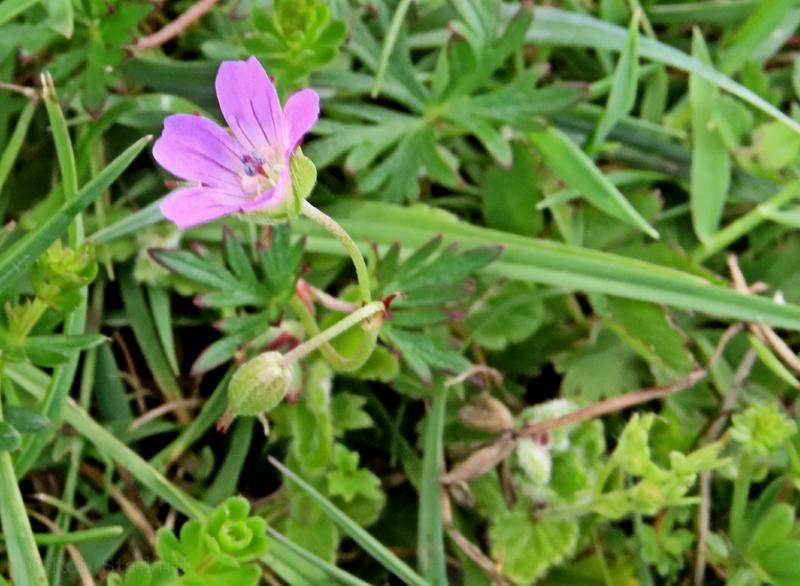
plants can be found on the shorter turf of the former scramble tracks. Common Spotted-orchid was putting on a particularly good display and the Pyramidal Orchids were just coming into flower. Seed heads of last year’s Carline Thistles were seen. Yellow-wort plants were widespread, some with buds and some with flowers. Also seen here were Dark Mullein, Fairy Flax, Quaking Grass, Wild Thyme, Squinancywort, Rough Hawkbit, Salad Burnet, Dwarf Thistle, Eyebright, Restharrow, Horseshoe Vetch and Long-stalked Crane’s-bill. A Swollen-thighed Beetle was spotted on one of the Rough Hawkbit flowers. Two female Common Blue butterflies and a Small Heath were also seen. Target species for the morning was the elusive Early Gentian, which had been discovered on the far side of Middle Field by Camilla Lambrick in the 1990s. Jan had found it in Middle Field in April 2009 and in Middle and Bottom Fields in May 2016. There had also been many unsuccessful hunts for Early Gentian at The Holies. All the plants had been found on the former scramble tracks, so this is where the search was being concentrated. The walk continued across the side of the valley in Middle Field, over the track at the bottom of the valley and up the other side. Here Dropwort, Field Madder, Dark Mullein and Vervain were added to the flower list. Also, a Dwarf Mallow plant with white flowers was found. A Five-spot Burnet moth with conjoined red spots was thought to be Zygaena trifolii ssp. palustrella. This sub
species is found on dry calcareous grassland and has an earlier flight time than the other Five-spot Burnet moths. A flock of 50 – 60 Black-headed Gulls was circling over the track at the lowest part of Middle Field. One of the group went off to check out the gulls and to look for flowers on the SSSI part of Bottom Field. He found good numbers of Common Rock-rose flowers there. The walk back was started in good time to avoid the forecasted thunderstorm. A Lesser Hawkbit flower on the acid grassland of Top Field was inspected carefully, pointing out its slender stem with hairs at the bottom and no scales. A number of insect pictures were taken during the walk, including a metallic green
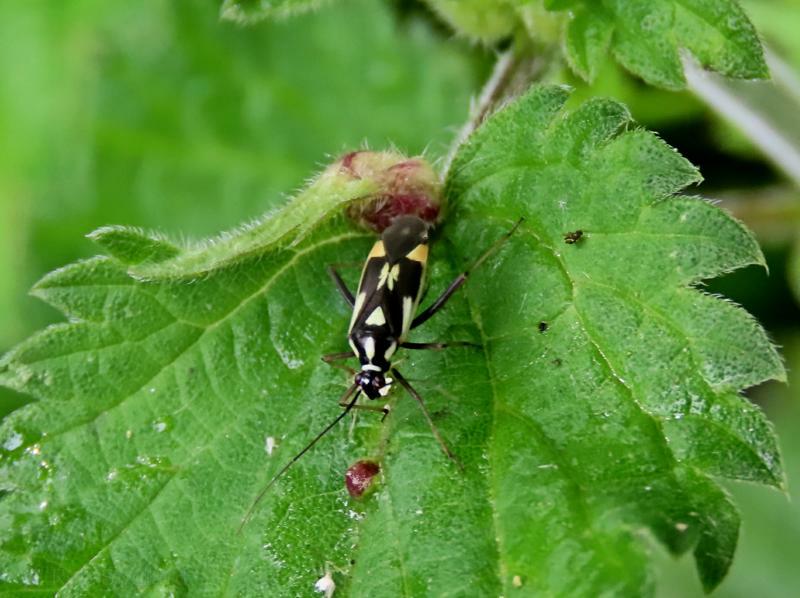
flower beetle, thought to be Cryptocephalus aureolus; a hoverfly, thought to be the Migrant Hoverfly Eupeodes corollae; a possible Early Bumblebee Bombus pratorum on Green Alkanet; the myrid bug Grypocoris stysi; the gall Dasineura urticae on nettles and the Speckled Bush-cricket Leptophyes punctatissima.