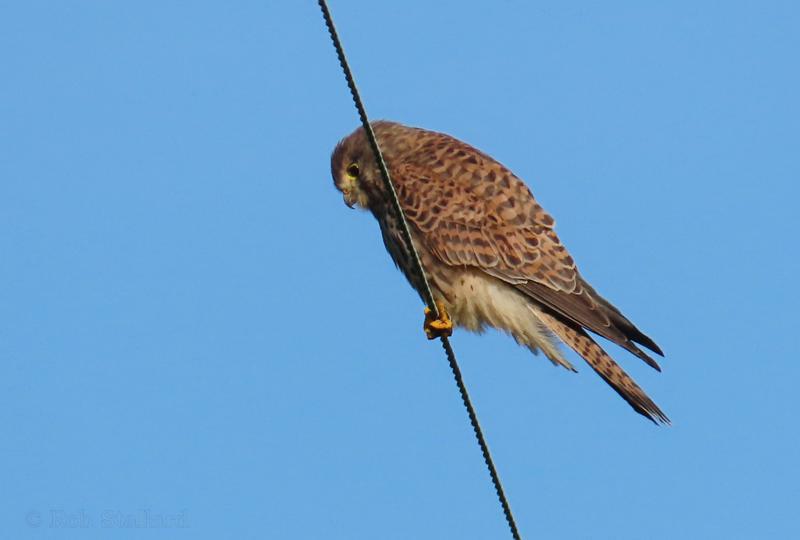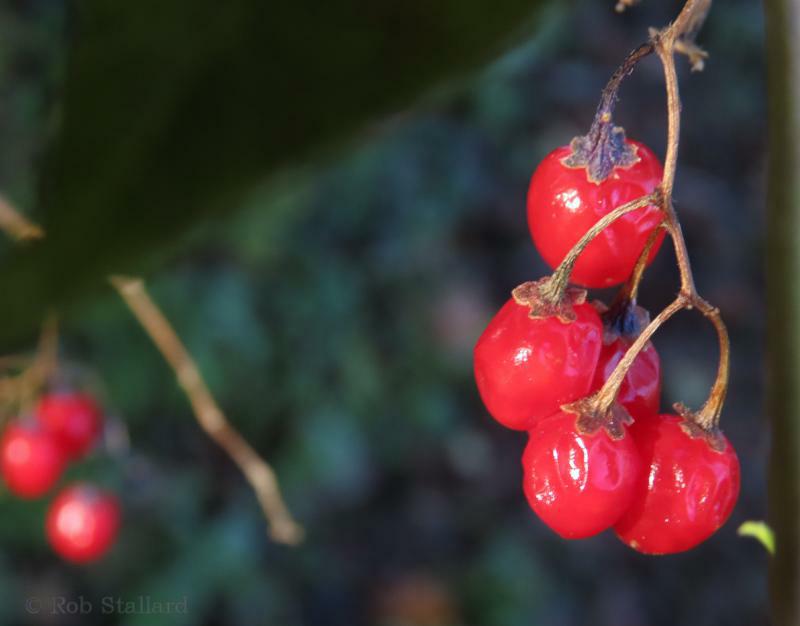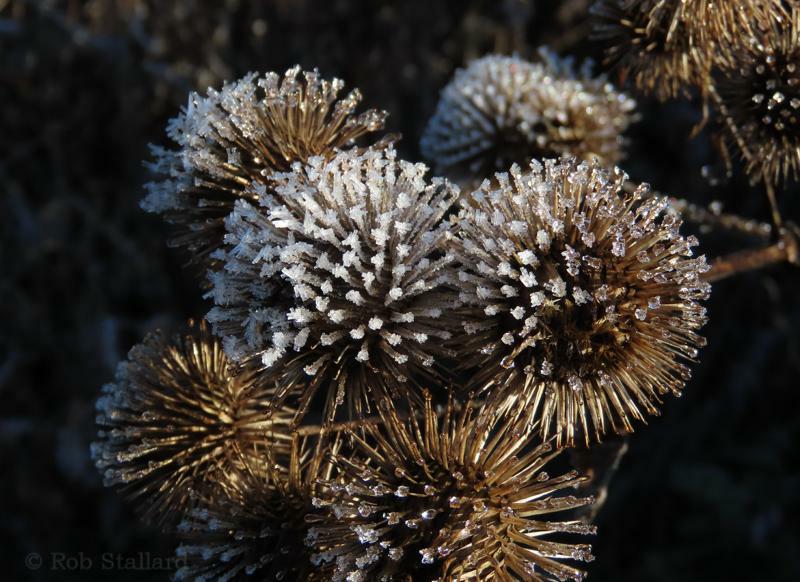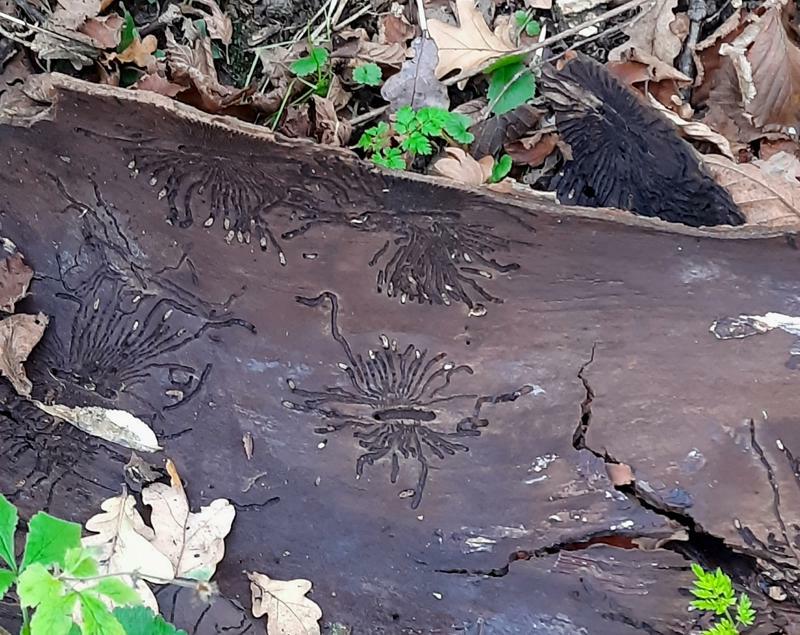
Ten members joined Rob Stallard for a walk at Brimpton on the morning of Wednesday 26 November, starting from the churchyard. The sun was shining and the sky was blue. A hard overnight frost had left the vegetation coated in rime. The route followed a footpath which led south-eastwards across a field and down towards the River Enborne. There were still flowers in the field margin and berries in the hedgerow. A Privet bush had shiny black berries and a Bittersweet plant had red berries. A Kestrel and a Pied Wagtail were perching in their respective trees, a Song Thrush was singing and eight Fieldfares were spotted in the field corner. The next field had a wide margin where a bird food crop had been sown. Plants identified here included Chicory, Flax and Wild Radish. The footpath ran close to the River Enborne. At this point, the river ran in a deep channel with near-vertical sides, cutting down through the underlying clay. Hop was growing nearby and small fish were seen from one of the bridges. The path ran through the site of a former poplar plantation where on a previous walk the semi-parasitic Purple Toothwort had been found in flower. It will be interesting to see if the Purple Toothwort will survive the felling of the poplar plantation. Rime-covered Greater Burdock seed heads were back-lit by the winter sunlight. The walk continued over a footbridge and into Inwood Copse. An Alder Bracket was found on a log and a big clump of Sulphur Tuft was seen. Greater Stitchwort leaves were already poking up through the woodland floor and Red Campion was found in flower. A series of molehills
followed the line of the path. The route crossed a quiet lane, with a ditch and bank marking the boundary of Inwood Copse. Wood Spurge was growing on the bank. Continuing along the footpath, a line of big fungi were identified as Trooping Funnel. The quiet call of a Bullfinch was heard. The walk continued along a network of footpaths and quiet lanes through fields. A small log had the aptly named White Paint fungus on its underside. Hogweed was in flower and a Redwing was on a Hawthorn bush. A shiny orange tuft of Velvet Shank fungi was seen and a Raven and a Buzzard were heard. The path crossed the Enborne again, then climbed uphill, with a new vineyard on one side. In 2022, the 7 acre vineyard was planted up with 15,000 vines of 3 grape types, Chardonnay, Pinot Noir and Pinot Meunier. These are the grape varieties which are used to make Champagne, or English Sparkling Wine. When mature, the vines should produce 10-15,000 bottles per year. A right turn onto another footpath led back to Brimpton. A noisy flock of Rooks disturbed the peace. Some were on the ground and some up on wires. After the walk, most of the group went to the Rowbarge at Woolhampton for lunch.