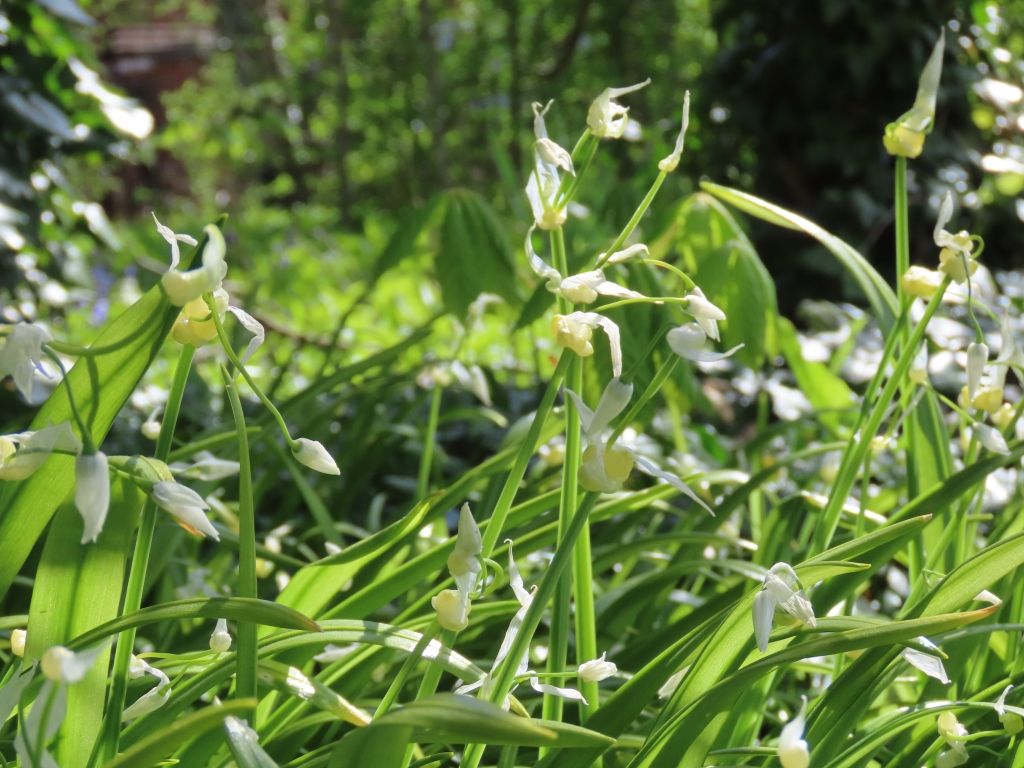
Richard and Alison Donnelly led a walk around part of the Maidenhead and Cookham Commons on Wednesday 9 April. It was initially cloudy with a chill wind blowing from the north-east, but as the morning progressed, the clouds melted away and the temperature rose. The walk started from the National Trust car park on Pinkneys Drive. A Blue Tit was busily nest-building in the top corner of the height-restrictor at the entrance to the car park. After crossing Pinkneys Drive, the route led eastwards across a large field which had been planted with wildflowers many years ago. It was yellow with a carpet of Cowslips. Continuing towards Pinkneys Green, an Early Dog-violet was identified by its dark spur and pointed sepals. Further on, Few-flowered Garlic, an introduced and potentially invasive species, was growing densely below a small group of trees. The walk continued northwards across grassy fields where Bulbous Buttercups were already in flower, the bright yellow flowers of Norway Maple were conspicuous and Cherry Plum and Blackthorn were flowering in the hedgerow. Windsor Castle and Cliveden could be seen in the distance. The footpath led to the site of the former brick and tile works. Hindhay Farm, one of the original buildings, had an impressive red terracotta dragon at one end of its roof.
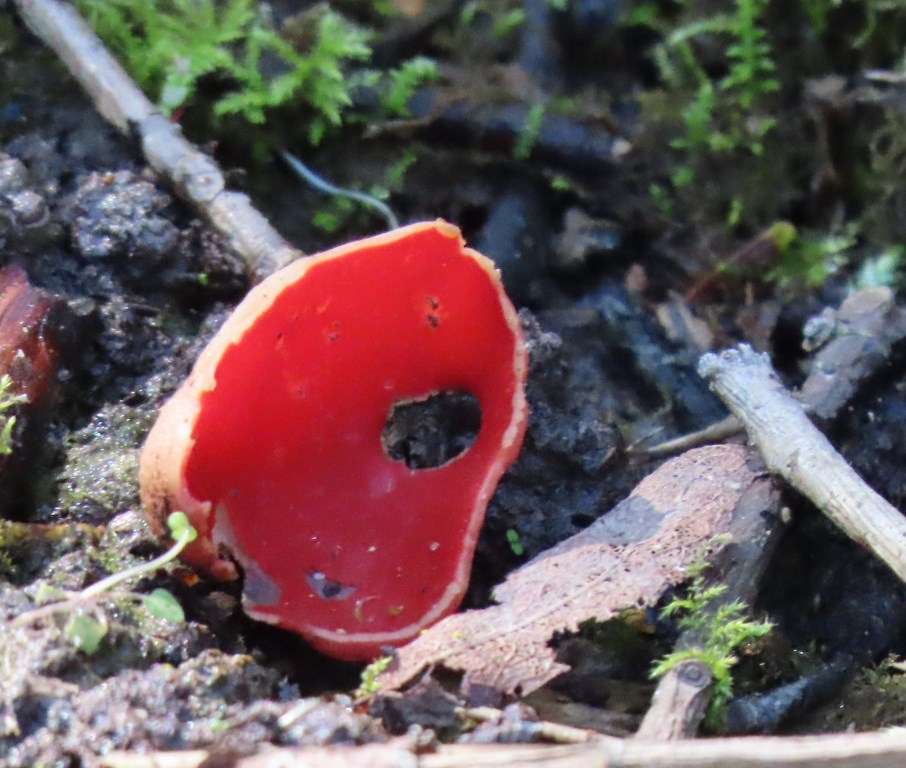
An area of woodland on the site of the former works has been designated as a nature reserve. Trees are dominated by Birch and Willow, while the former clay pits have become ponds. Sanicle leaves, shiny on the underside, were found near the entrance to the reserve and nearby, a Lesser Burdock leaf was shown to have a hollow stem. An unfamiliar water plant was identified as Water-soldier, which is a free-floating submerged perennial, rising to the surface at flowering time. The long sword-like leaves with spiny marginal teeth are arranged in a basal rosette. Continuing round the reserve, a pile of cut branches was home to a colony of Scarlet Elf-cup fungi. Following on from the Early Dog-violet seen earlier in the walk, Common Dog-violet flowers with pale spurs were seen here. The walk round the reserve returned to the start. Where the path emerged from the reserve, a male Kestrel with a grey head was perched on a telegraph pole. It gave a superb display of hovering and hunting, but without success.
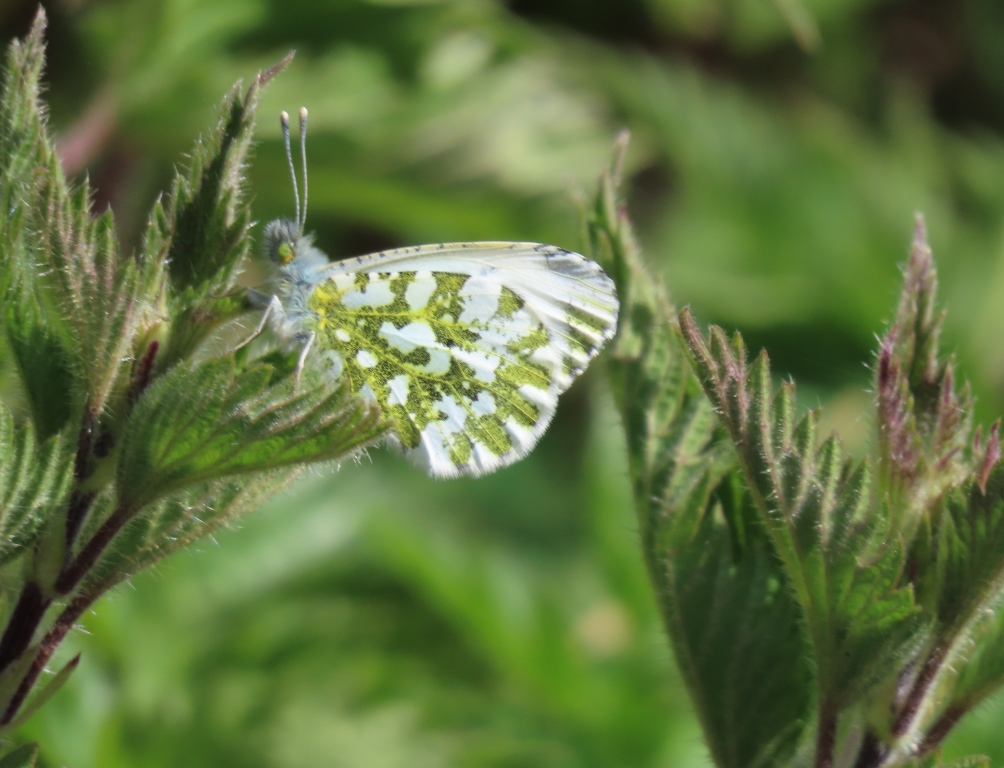
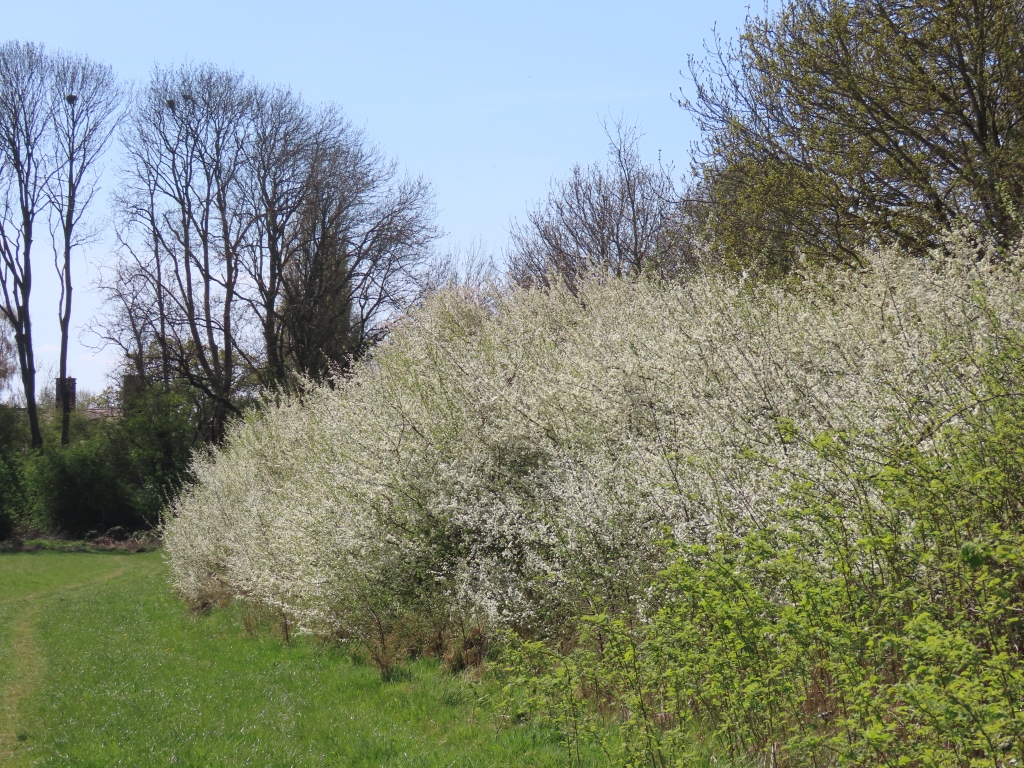
The route then led into an area of woodland. Many Bluebell flowers were already out, but it was still probably a week or two before peak Bluebell time. There were many Wood Anemones near the path. Also seen here were two forms of Lesser Celandine. Some had large petals to attract pollinating insects. Others had thinner petals and spread vegetatively with bulbils. A Holly Blue butterfly flew past, a sign that the day had warmed up enough for the butterflies to start flying. Also seen soon after were a Green-veined White, a Peacock and both male and female Orange-tips. Goldilocks Buttercup, with its small petals, was flowering here. The track emerged from the woods near the Golden Ball pub. In front of the pub was a grassy green with many Cuckooflower flowers. Also seen here were Common Sorrel and Shining Crane’s-bill, which had small pink flowers and leaves which were shiny on top. These were compared with the Sanicle leaves which had been seen earlier in the walk and which were shiny on the underside. The last part of the walk was across several fields where Blackthorn blossom in the hedges formed a dense white blanket. Speckled Wood and Comma butterflies were added to the species list, together with Sweet Violet.
Most of the group then went for lunch at the Bird in Hand at Knowl Hill.